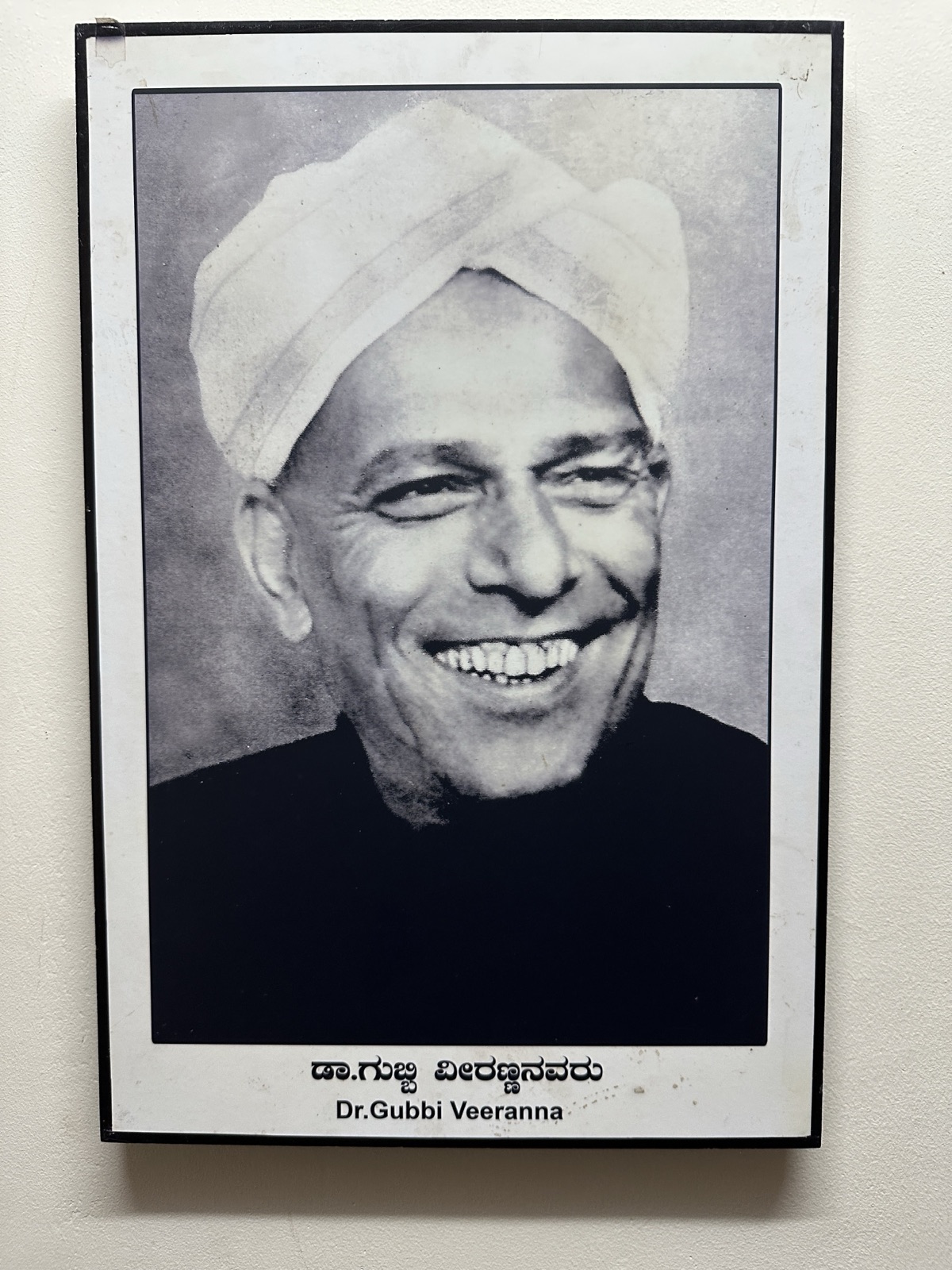
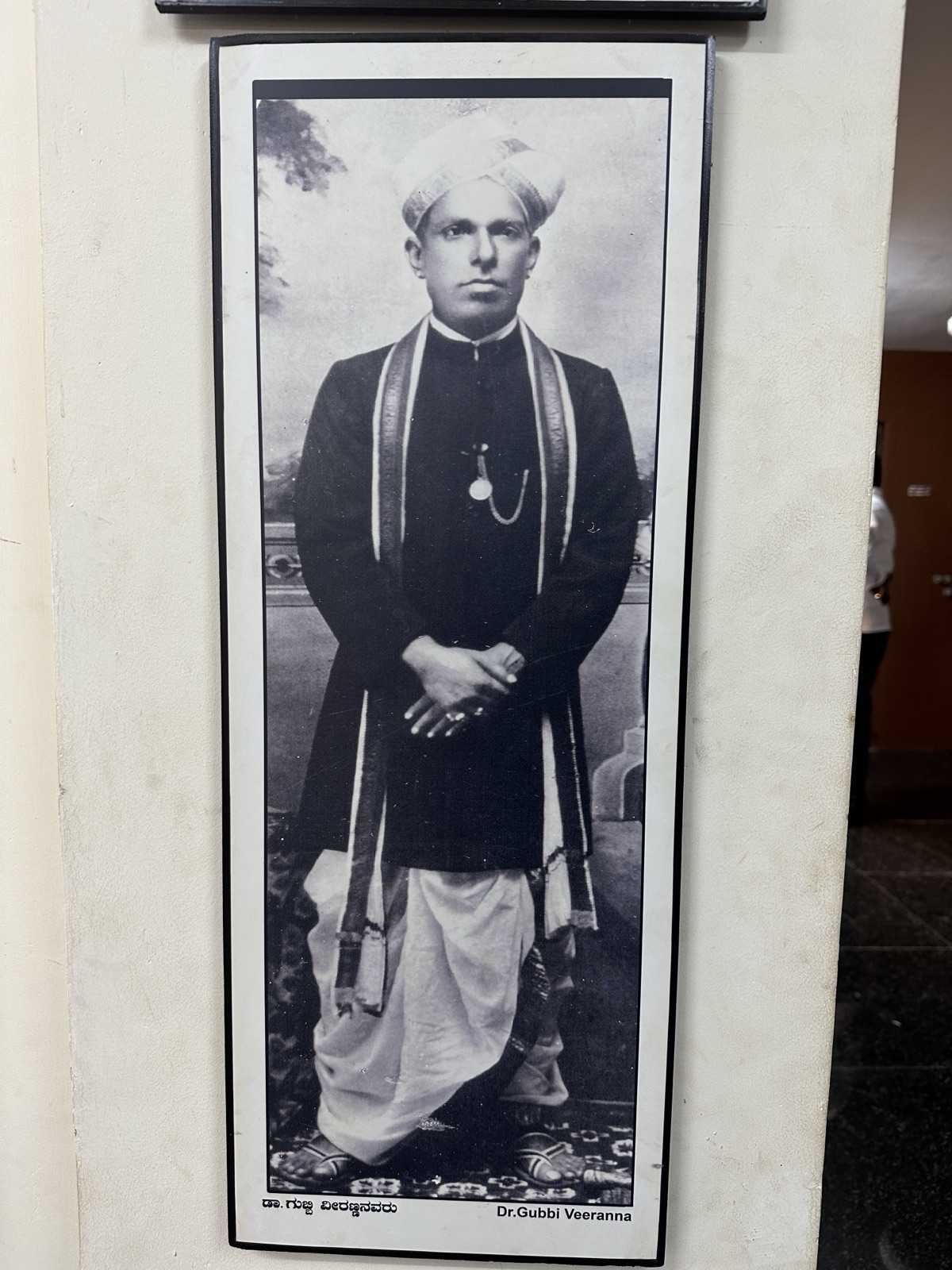
GubbiVeeranna
“He is not a person — a great stage power — actually he is the stage spirit of Kannada.”
— Devudu Narasimhashastri
Three Communities, One Stage
1884 – 1896
In 1884, three men from three communities — Chendanna, a Jaina; Abdul Aziz Saheb, a Muslim; and Neelakanthappa, a Veerashaiva — came together in the small town of Gubbi to found the Sree Channabasaveshwara Nataka Company. It was an improbable union in the princely state of Mysore, a declaration that the stage belonged to everyone.
Twelve years later, in 1896, a six-year-old boy named Veeranna joined the company. Born in the nearby village of Gulaganjihalli on January 24, 1891, he would spend the next seven decades on the stage — rising from child performer to proprietor, transforming Kannada theatre from village entertainment into a professional art form that captivated audiences across South India.
When the six-year-old Veeranna joined in 1896, the professional Kannada theatre was in crisis. Most troupes of the previous decade had collapsed — Ranganath describes them as ‘one pole tent troupes’ dependent on a single performer. The Gubbi Company, founded by three men from three communities, would prove to be the exception that endured. That same year, a lady artist named Rajamma joined the company — one of the earliest documented female performers on the Karnatak professional stage, decades before women’s participation became a public controversy.
The company was ahead of its time: Rajamma joined as a performer as early as 1891 — decades before the heated 1931 Drama Conference debate over whether women should be allowed on the professional stage. By the 1930s–40s, the company employed several acclaimed actresses including K. Aswathamma, Tripuramba, and B. Jayamma.
— Ranganath (1960), pp. 168–180
Source: Kannada Wikipedia; company founding confirmed by Ranganath (1960); Ranganath (1960), p. 101
The Defining Moment
17 November 1923
— Inscription —
PRESENTED BY HIS HIGHNESS THE
MAHARAJAH OF MYSORE G.C.S.I.
To G.H. VEERANNA
PROPRIETOR AND VERSATILE COMEDIAN
OF C.B.K.N. CO. OF GUBBI
17-11-23
By his early thirties, Veeranna had risen from child performer to the undisputed leader of the most celebrated theatre company in the Mysore state. His Highness Krishnaraja Wodeyar IV, the Maharajah of Mysore, personally commended him — recognizing not just the man, but the art form he had elevated.
This moment would define Veeranna’s life. When he sat down to write his memoir nearly four decades later, at the age of 71, this inscription appeared on page 8 — and the final page of his diary circled back to this same date: November 17, 1923.
Source: Verbatim English inscription, diary page 8
Elephants on Stage
1934 – 1938
The 1934 production of Kuruksetrawas the most spectacular staging in the history of Kannada theatre. Veeranna spent Rs. 30,000 — an extraordinary sum — on a single production, complete with live elephants, elaborate sets, and a cast so large that a purpose-built zinc-sheet pandal seating 4,000 was constructed for its performances.
Each show ran for six hours. The touring company numbered 250 people — actors, musicians, stagehands, and the animals themselves. It was theatre on an industrial scale, a spectacle that no Kannada audience had ever witnessed before.
“Spectacular indeed, with its settings and scenery… but such overdoing of settings sacrificed all directness, simplicity and symbolism.”— Ranganath (1960)
“Many film shows were cancelled and the organisers wrote and wired to the distributors asking them not to send good films owing to negligible public response to the films because of Gubbi's Kuruksetra.”— A. N. Krishna Rao, cited in Ranganath
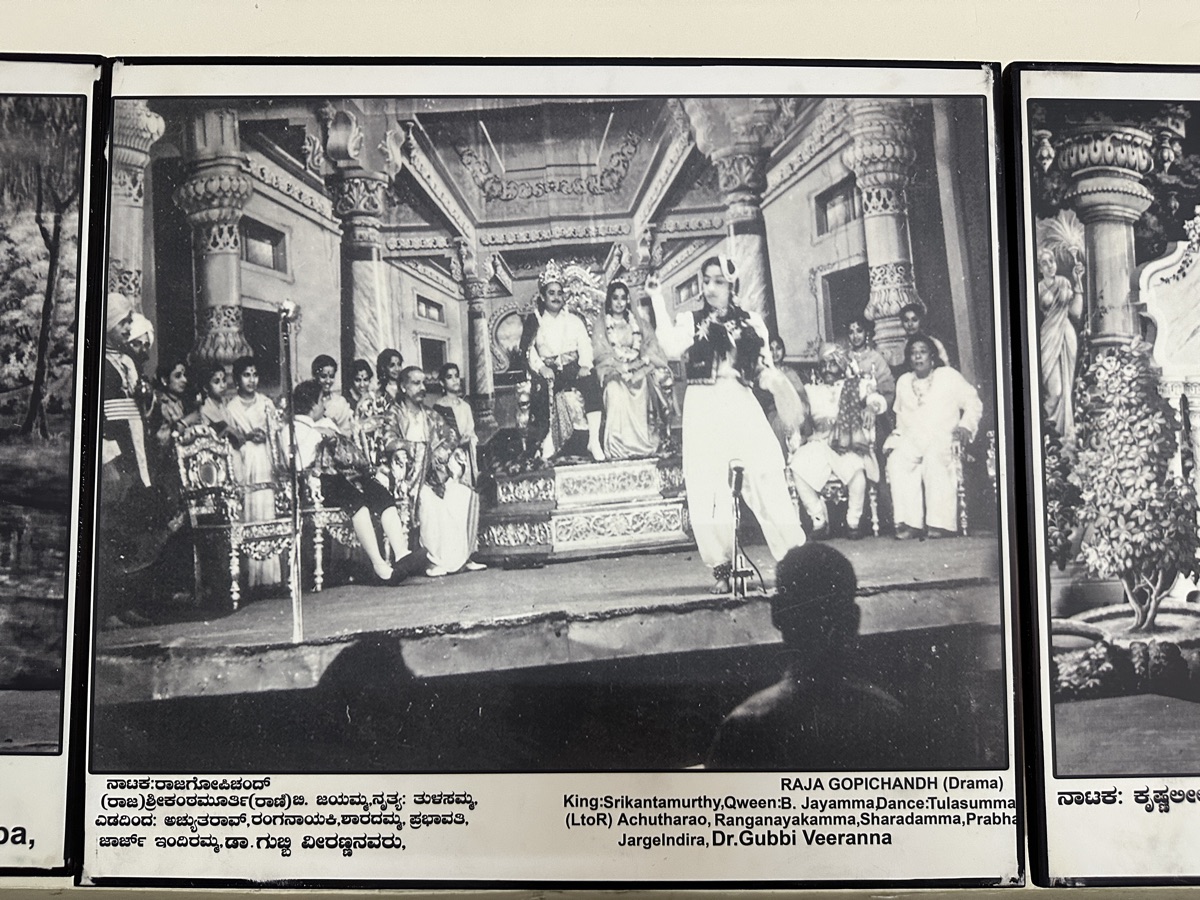
Raja Gopichandh — full cast on stage
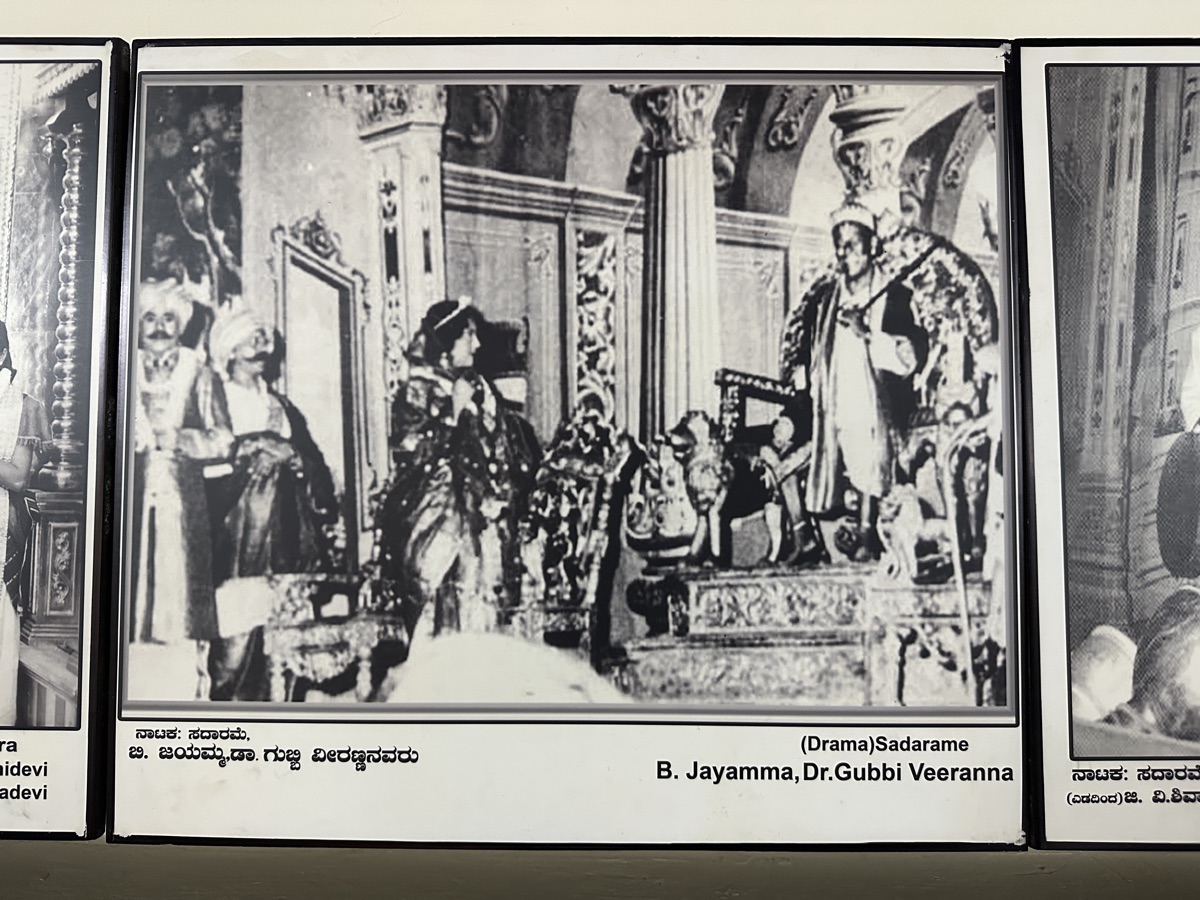
Sadarame — the grand court scene
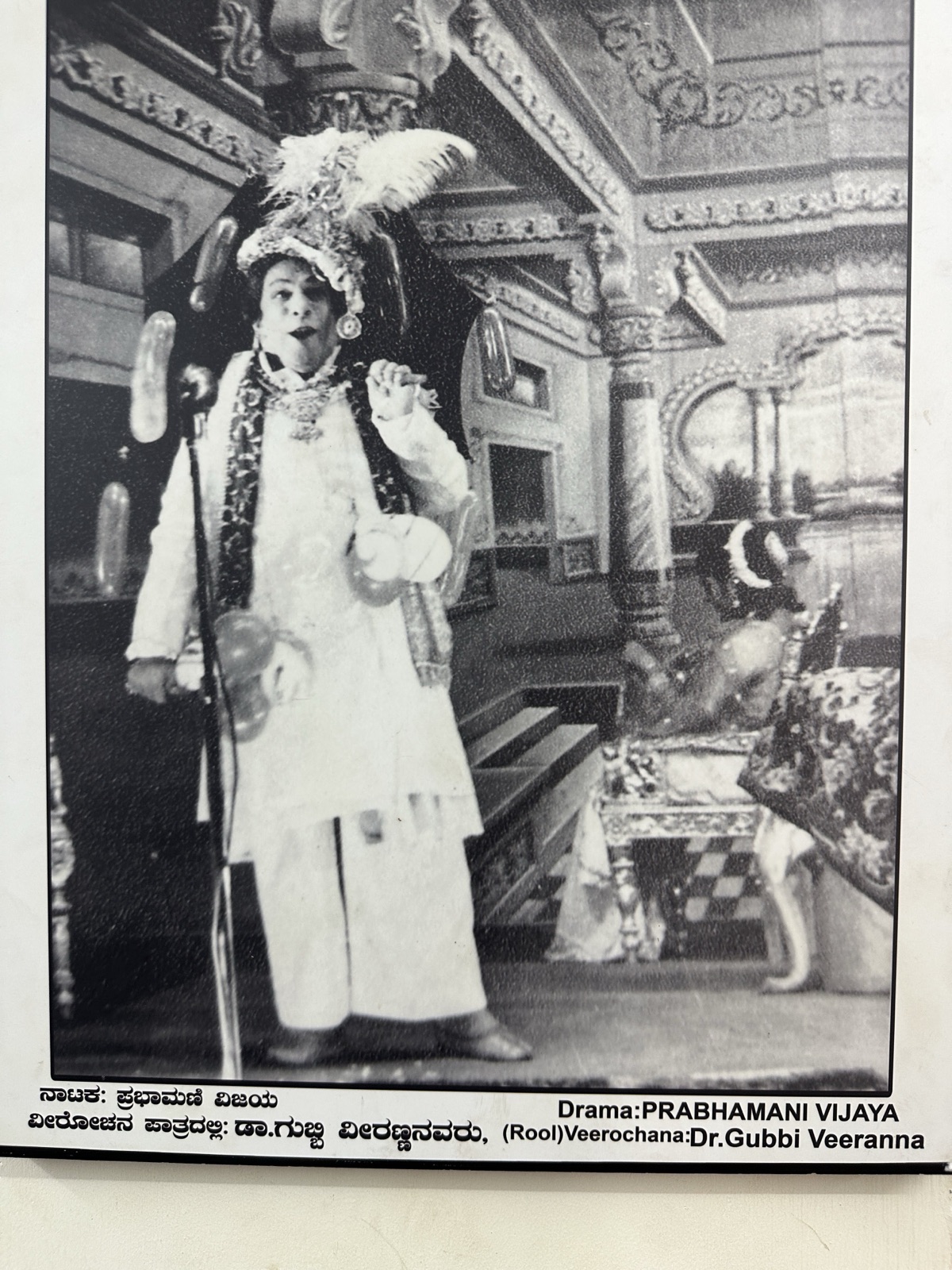
Prabhamani Vijaya — as Veerochana
Behind the Spectacle
A life-size elephant head carried by two stagehands, with a string-operated trunk that could be manipulated from behind the scenes.
Vrutti Ranga Darshana (1993), p. 187
A lower platform, a middle stage, and an upper level — with mechanical lift mechanisms operated by stagehands for dramatic reveals.
Vrutti Ranga Darshana (1993), pp. 183–184
Krishna's divine discus built as a child-sized wheel with a fan motor attached, spinning on stage during battle scenes.
Vrutti Ranga Darshana (1993), p. 191
Spring-loaded handles concealed in props for Krishna Leela, creating magical illusions visible from a distance.
Vrutti Ranga Darshana (1993), pp. 182–183
Source: Diary page 113, confirmed by Ranganath (1960)
172 Pages, Looking Back
28 September 1962
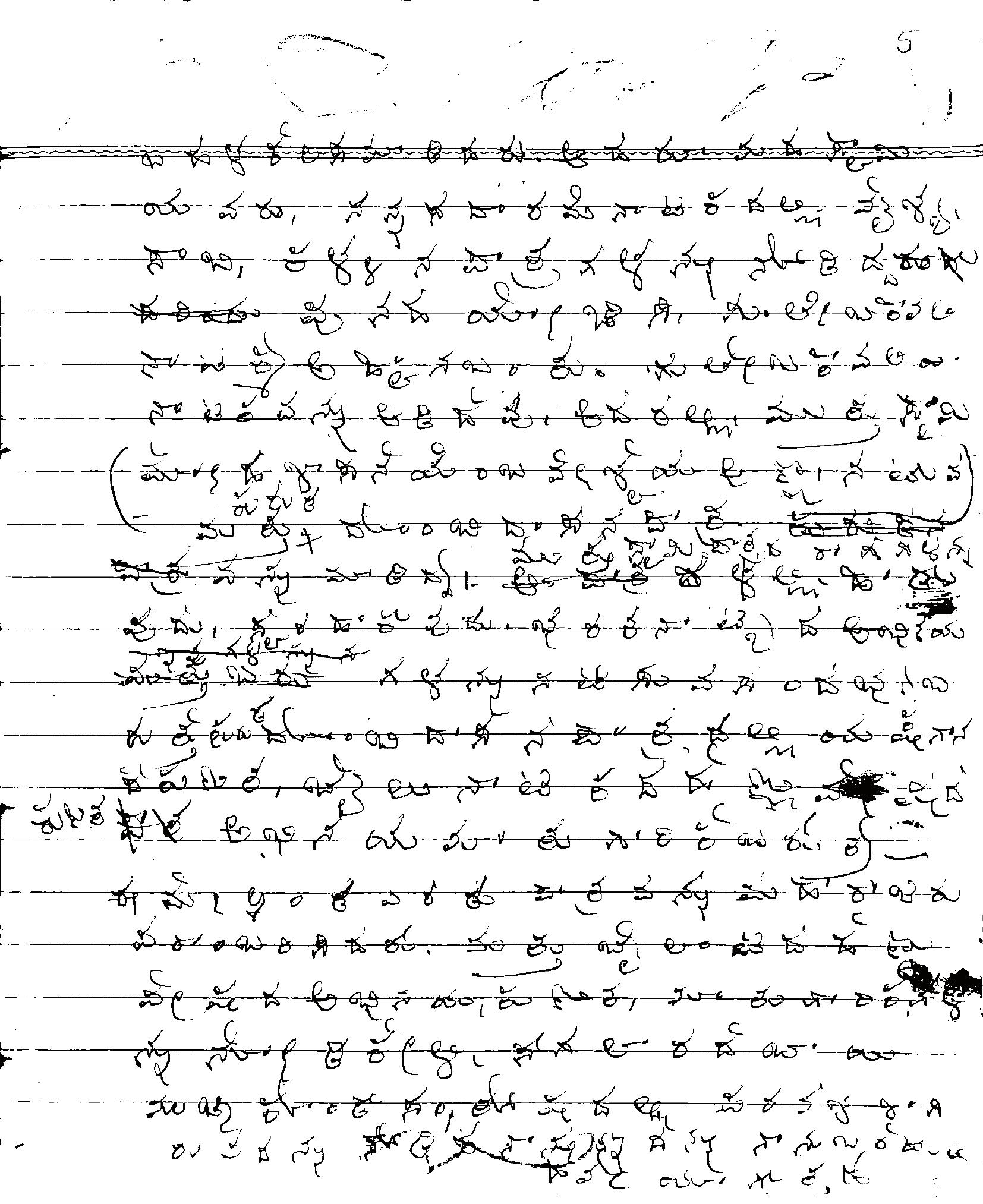
On September 28, 1962, a 71-year-old Veeranna sat down to write. What emerged was a 172-page handwritten memoir in old Kannada cursive — the only surviving first-person account of the birth of professional Kannada theatre.
The diary is labeled “Book 2,” implying a first volume that has never been found. Its pages contain financial ledgers, tour itineraries, benefit performance records, hand-drawn portraits of theatrical characters, animal illustrations, and intricate rangoli patterns. It opens with a devotional prayer and closes with one.
The final page circles back to November 17, 1923 — the moment that defined his life.
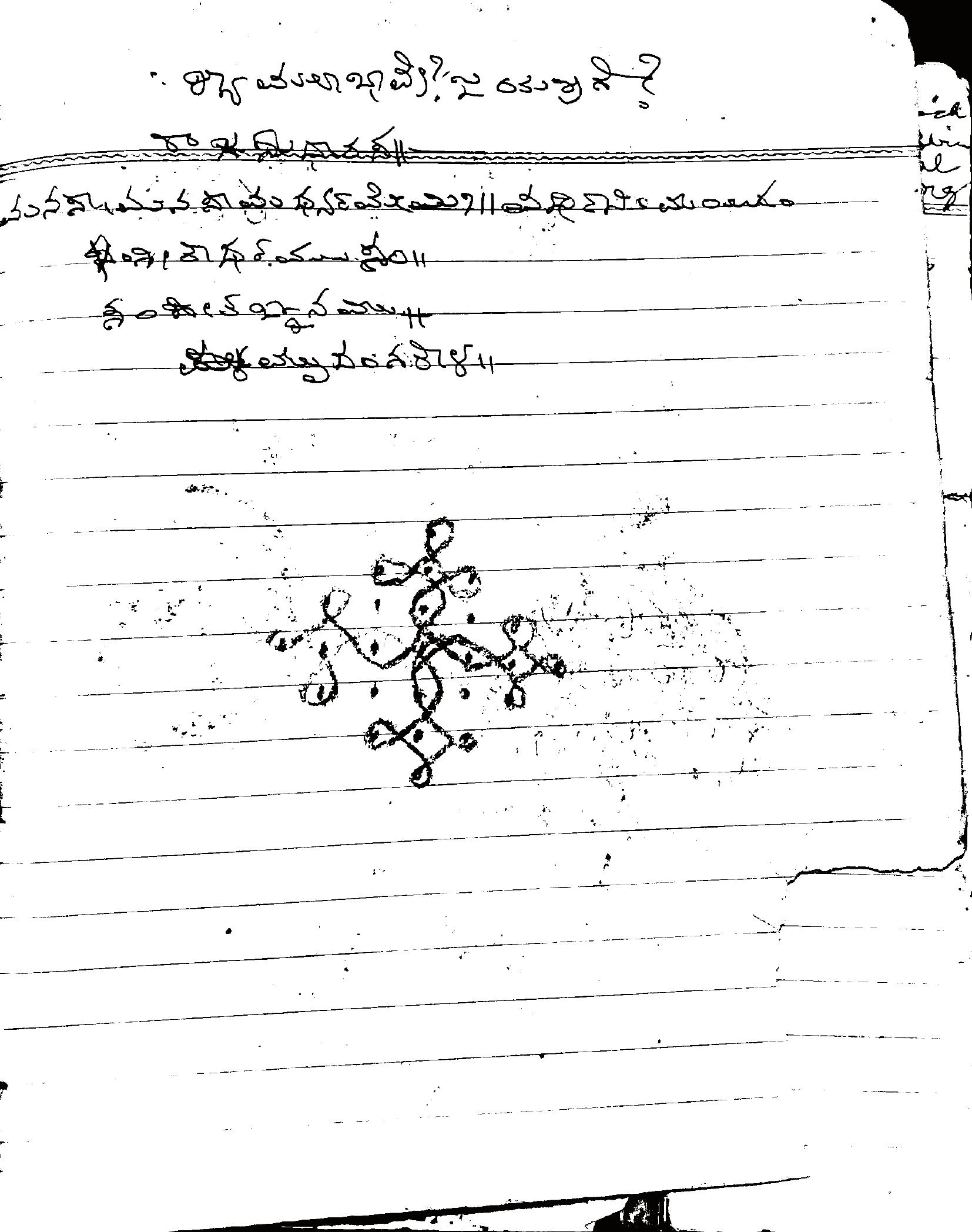
Page 170 — the closing prayer with rangoli
Source: Diary colophon, page 1; structural analysis of 172 pages
“The Chaplin of Karnatak”
The Comedian
“The critic recognised the elements of Charles Chaplin in his performances and called him the Chaplin of Karnatak.”— Ranganath (1960)
“Even if you go to the height of Gaud Shankar, never talk like 'I am.' If you respect and praise me — I am small.”— Gubbi Veeranna
Veeranna was known by many names. His titles reflected the evolution of his artistry:
His comedy began with facial contortions and farces, then refined over the decades into clever wordplay and social commentary that left audiences weeping with laughter.
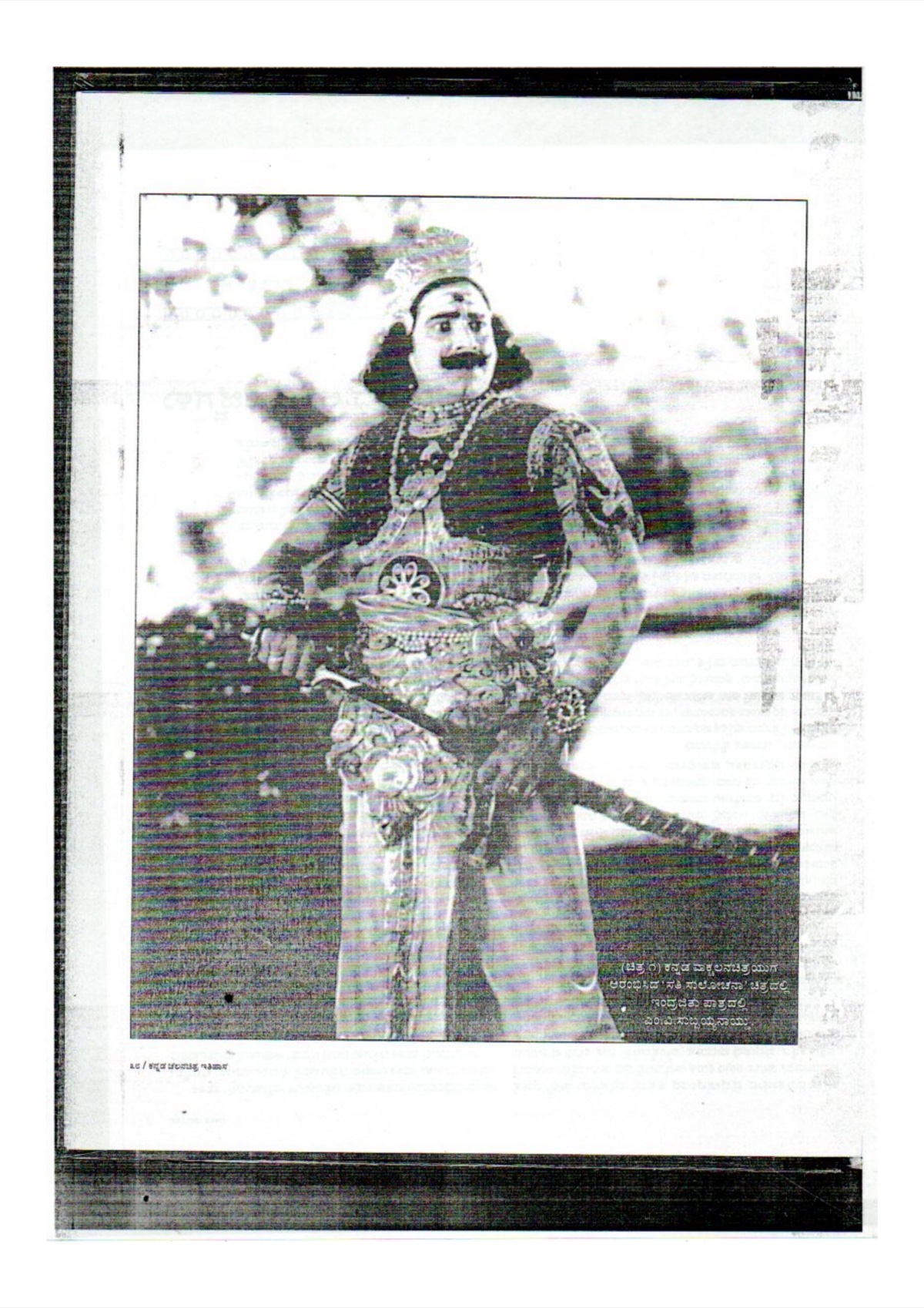
Theatrical warrior costume
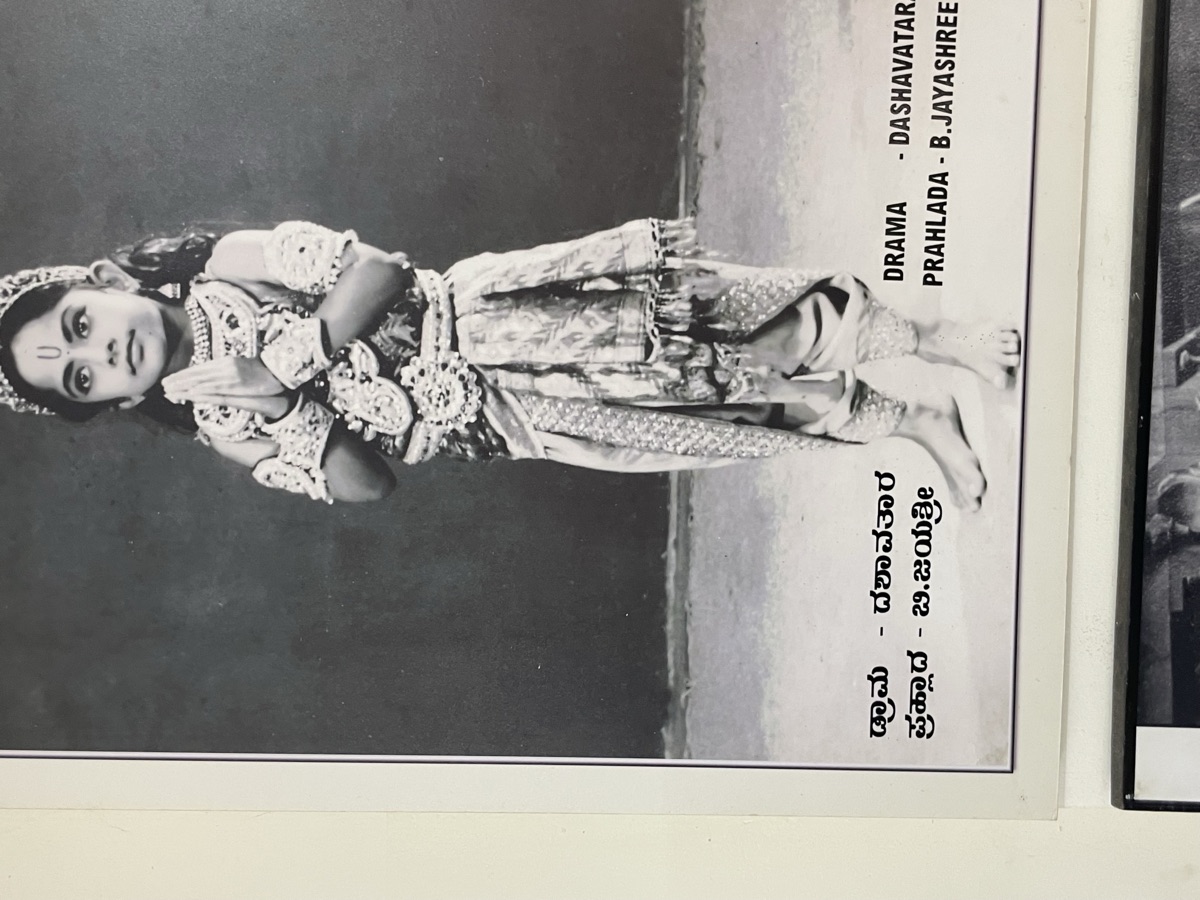
Dashavatar — Prahlada scene
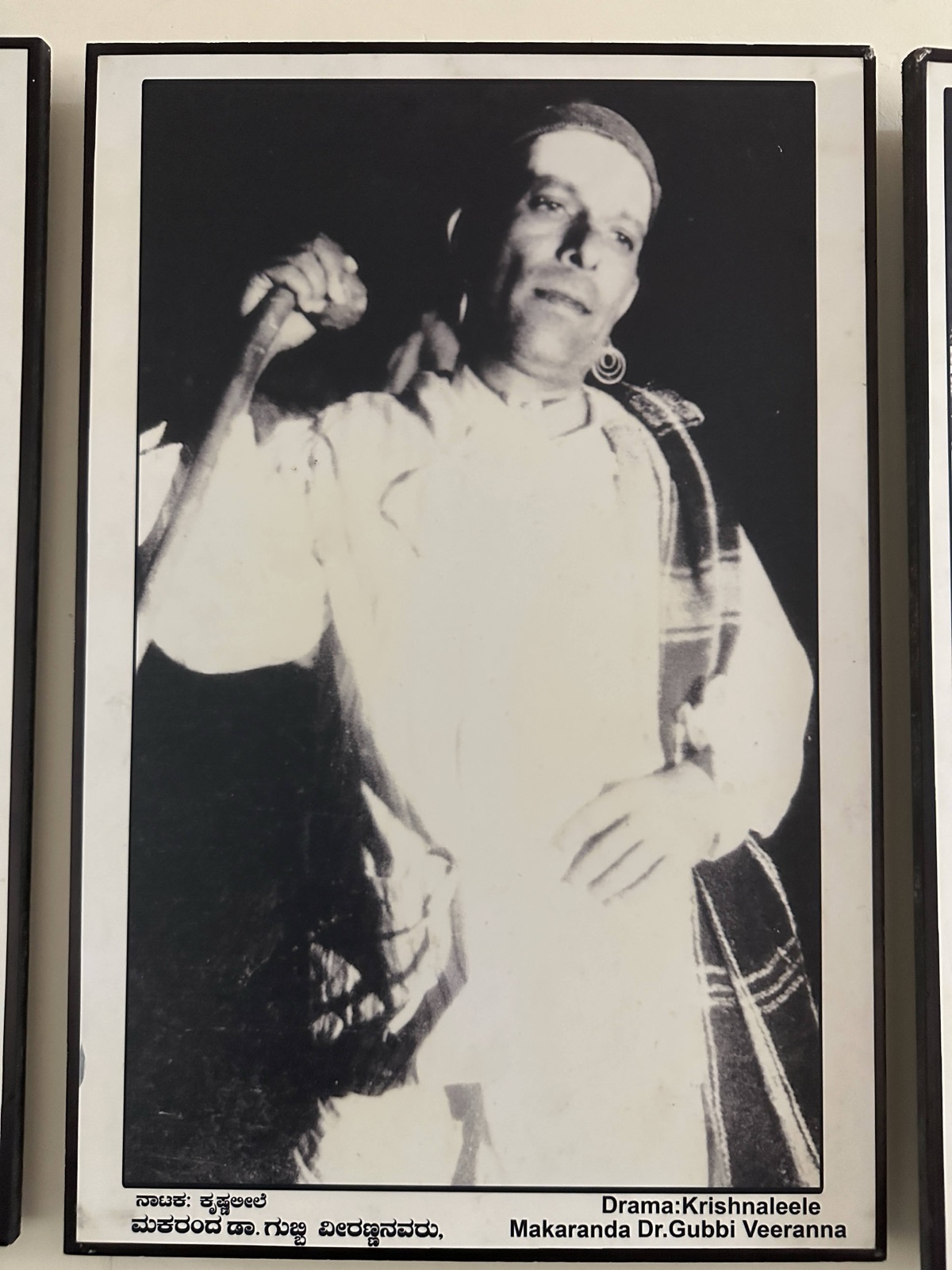
As Makaranda in Krishnaleele
Costumes and roles from the Gubbi Company repertoire
Signature Comic Roles
Abnormal/subnormal character — one of his most famous roles
Tragic role attempt (1934) — audiences rejected it and demanded his return to comedy
His audiences had come to love him in comedy. When he attempted the tragic role of Duryodhana in Kuruksetra(1934), they rejected the departure entirely. The crowds demanded their Nakali Veeranna back — and he returned to comedy, the art form that defined his legacy.
Source: Ranganath (1960), pp. 152-155
Ambassador of Karnatak Art
Tours & Reach
Mysore State
Bangalore, Mysore, Gubbi, Gadag, Hubli, Bellary, Udipi, Mangalore
South India
Madras, Salem, Coimbatore, Trichy, Kumbhakonam, Ettiyapuram
Andhra
Warangal, Bezawada, Kokinada, Vijayanagaram, Nellur
After 1935, the company’s scale of operations required special trains to carry equipment and personnel. Three simultaneous touring wings operated independently, allowing the company to perform in multiple regions at once. Performances were delivered in multiple languages — Kannada, Telugu, and Tamil — adapting to local audiences while maintaining artistic standards.
In 1945, the company staged 17 plays at the Mysore Palace. In Vijayanagaram, Veeranna earned the title “Karnatak Andhra Nataka Sarvabhauma”— Emperor of Karnatak and Andhra Theatre.
With Dignitaries & Leaders
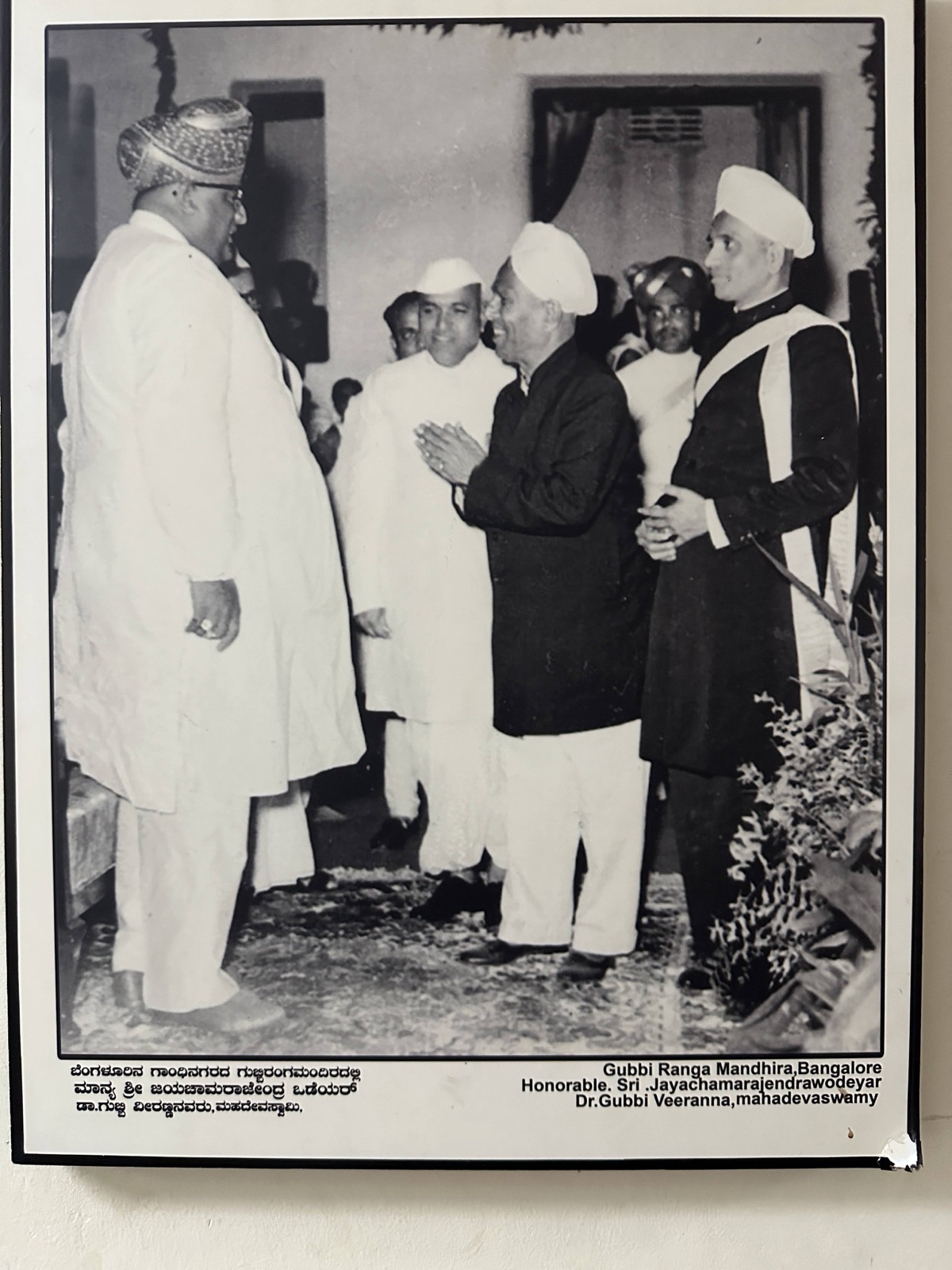
With Maharaja Jayachamarajendra Wodeyar
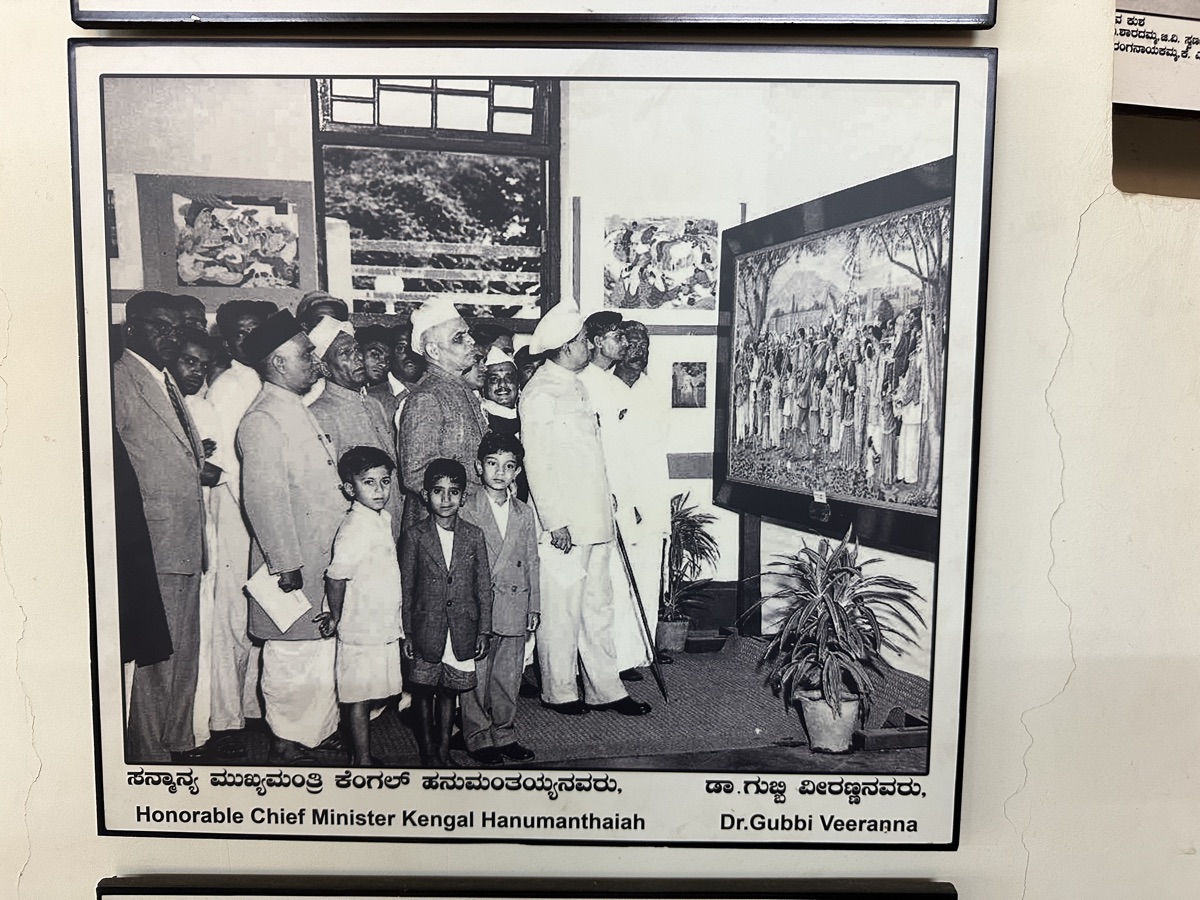
With CM Kengal Hanumanthaiah
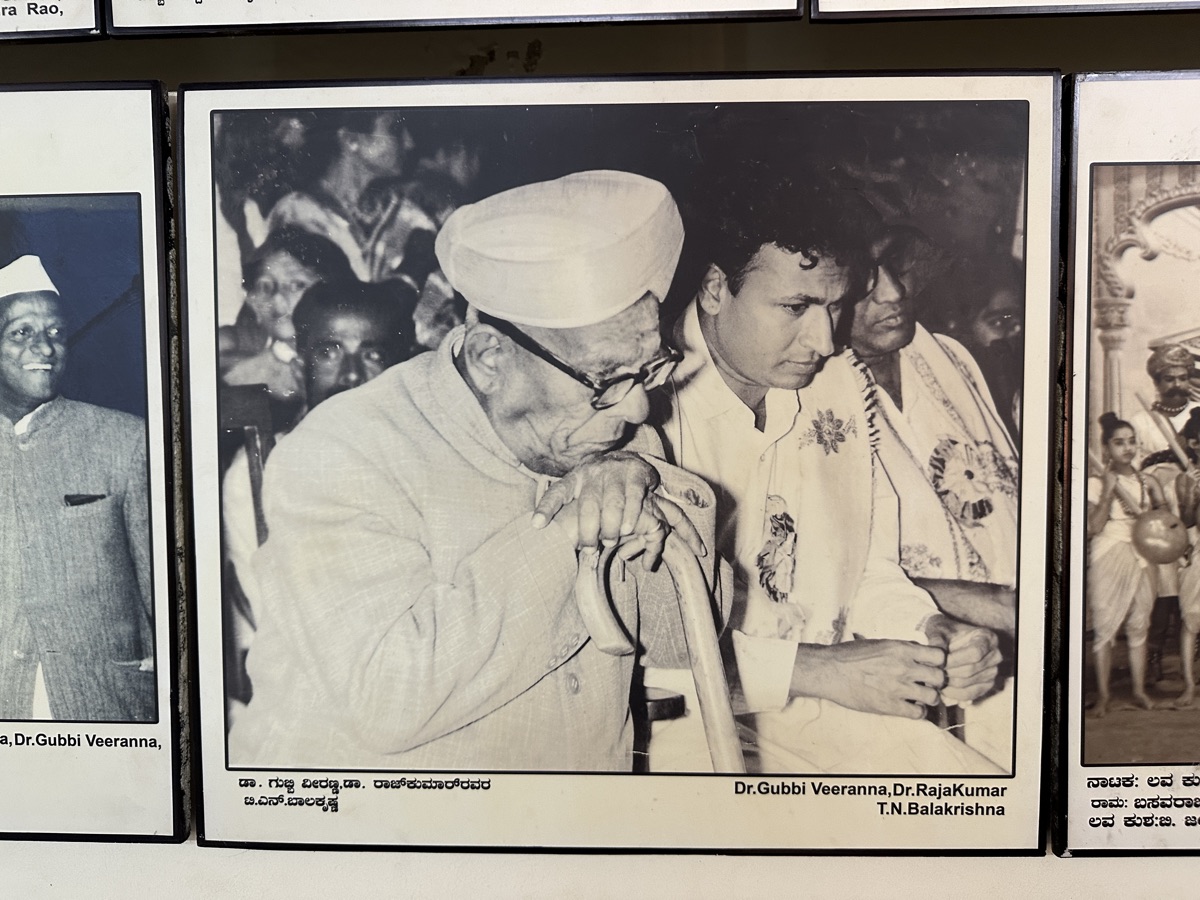
With Dr. Rajkumar & T.N. Balakrishna
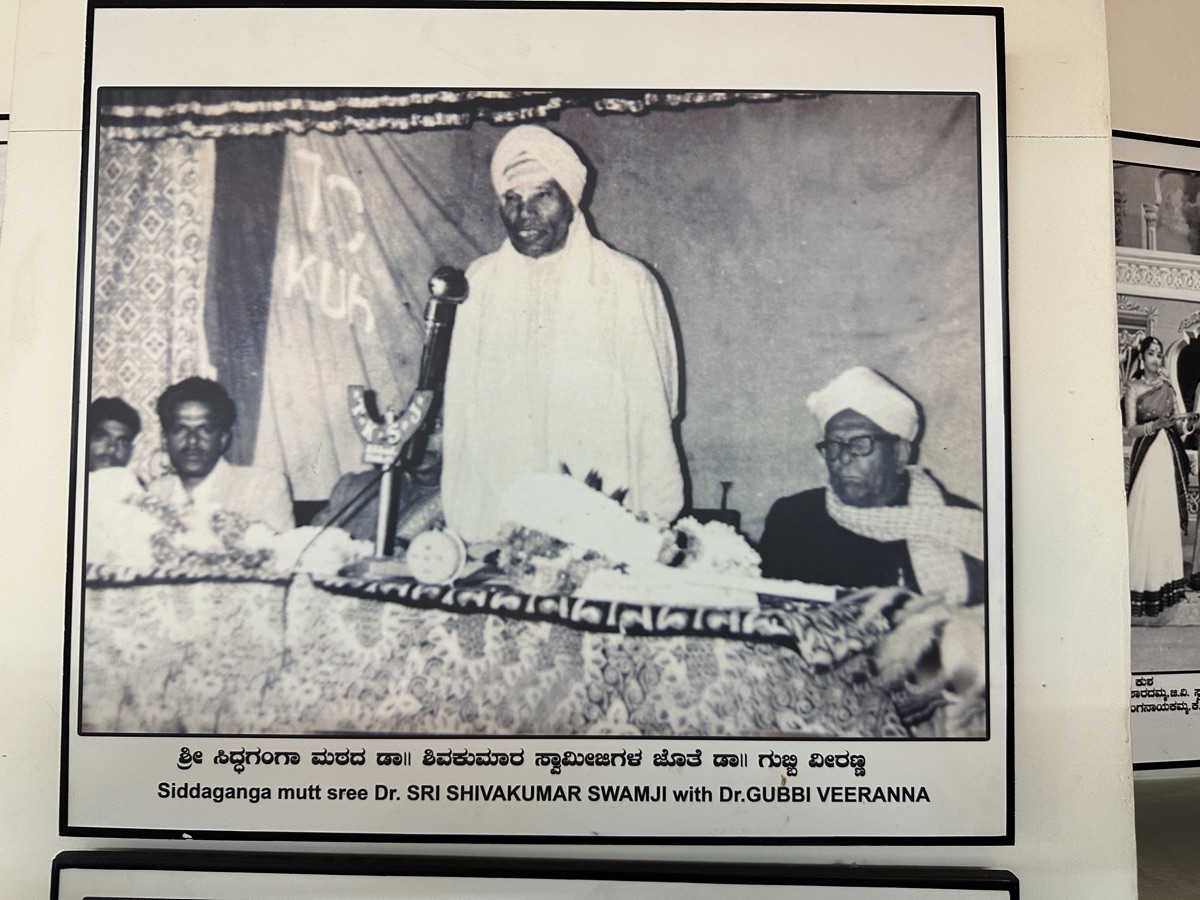
With Sri Shivakumar Swamji
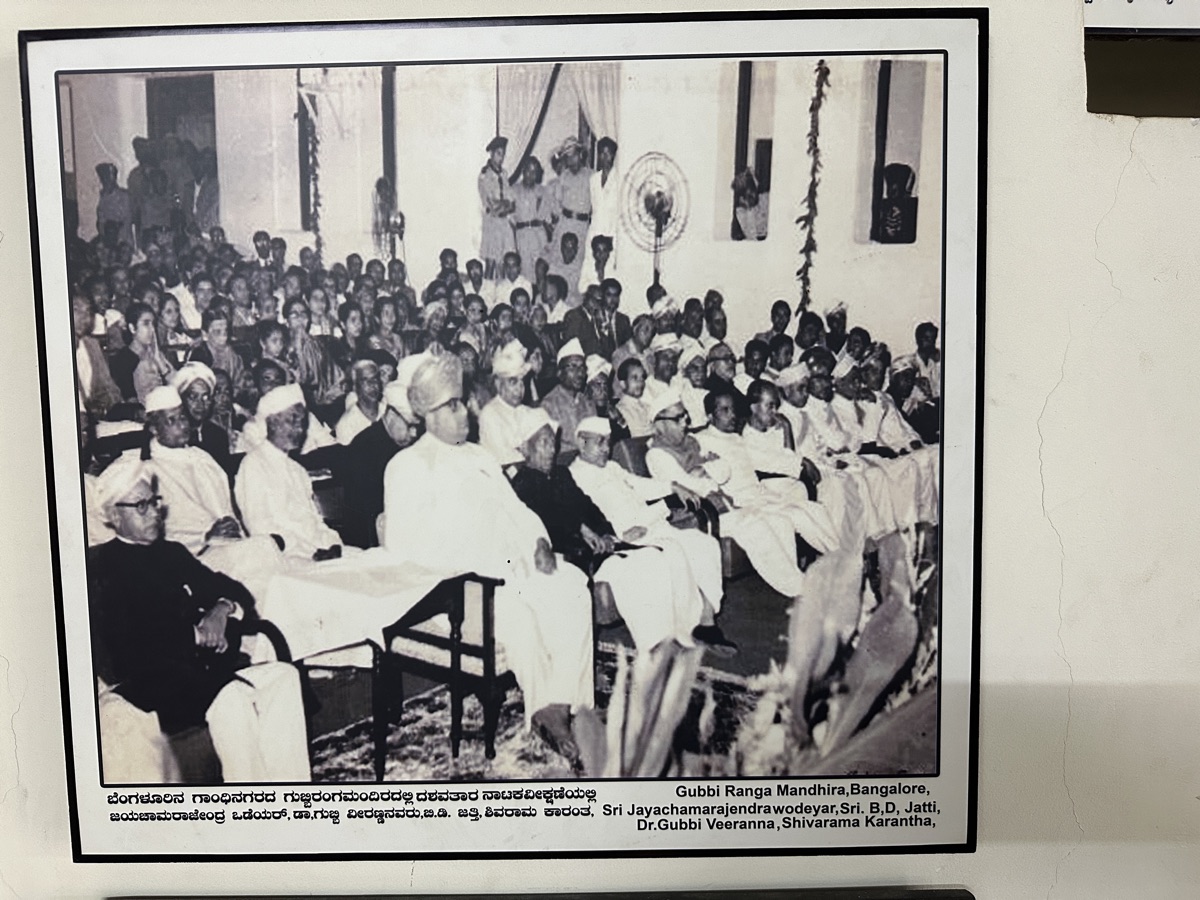
Ranga Mandhira inauguration with B.D. Jatti
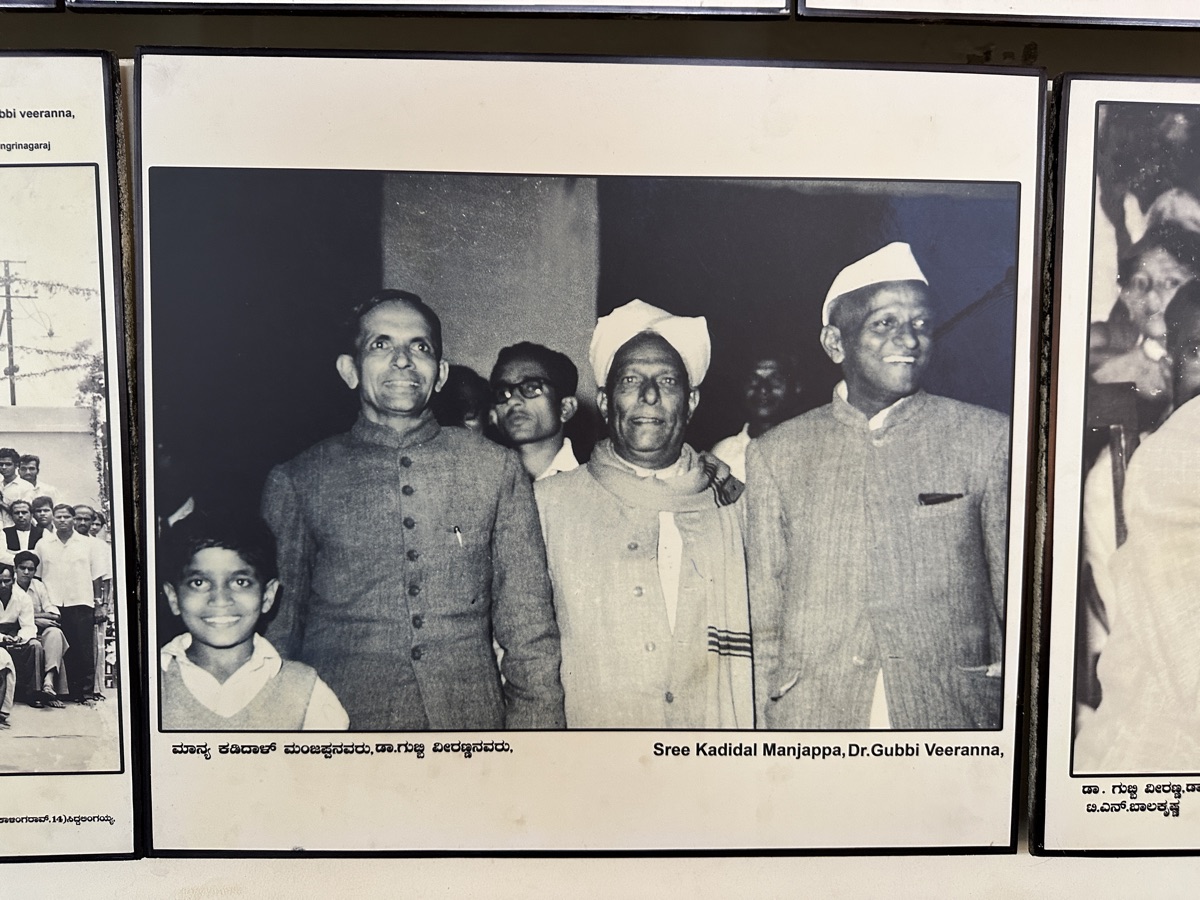
With Sree Kadidal Manjappa
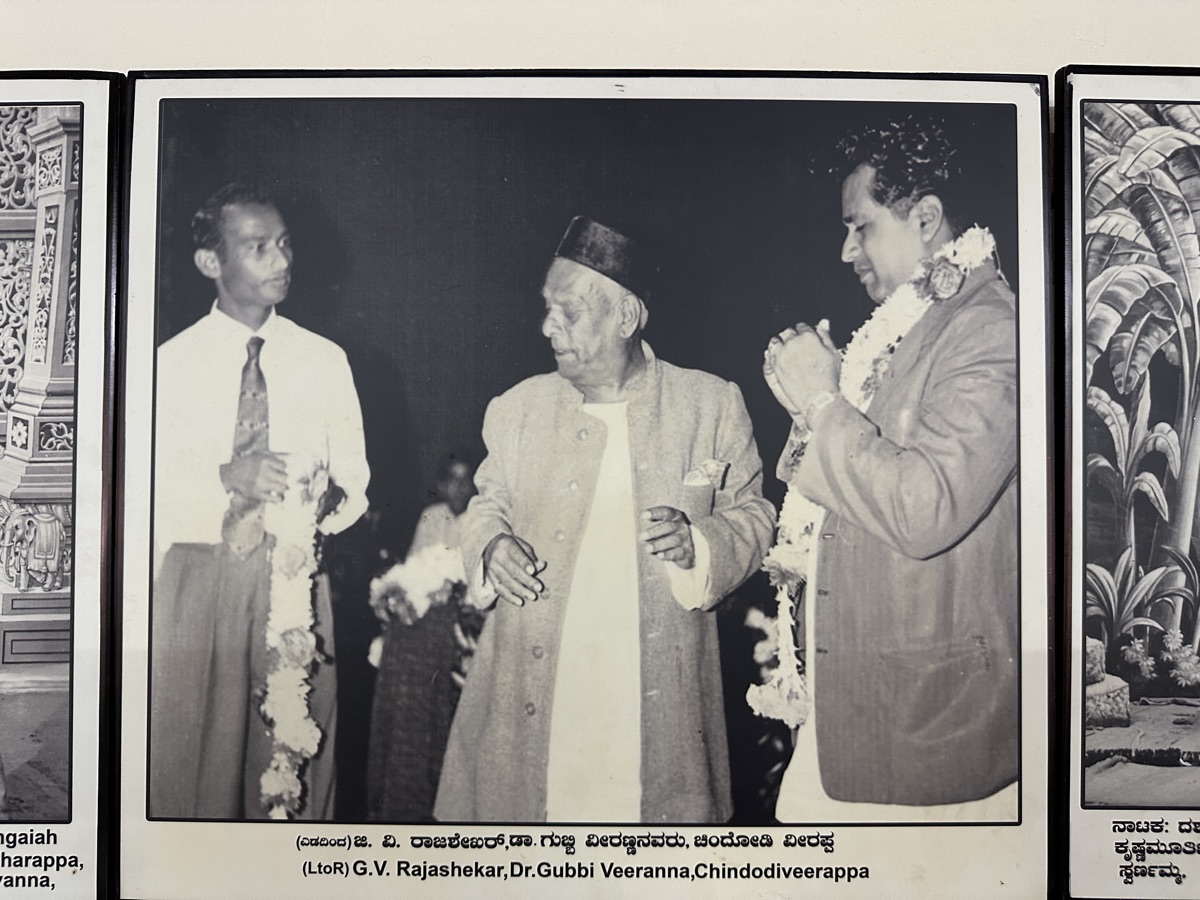
With G.V. Rajashekar & Chindodiveerappa
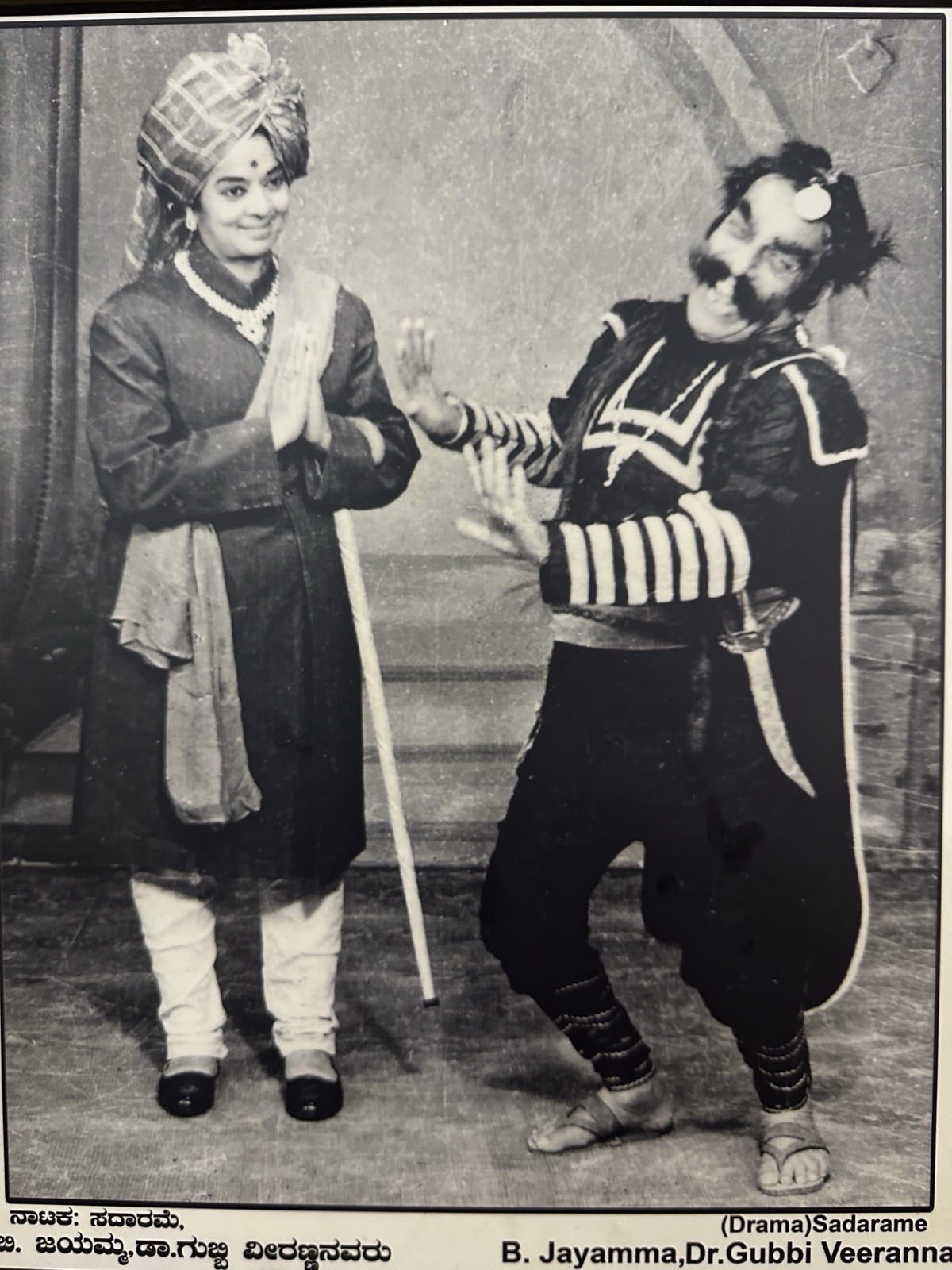
Sadarame — with B. Jayamma
Source: Ranganath (1960), pp. 110-114, 162
From Stage to Screen
Film Pioneer · 1928 – 1954
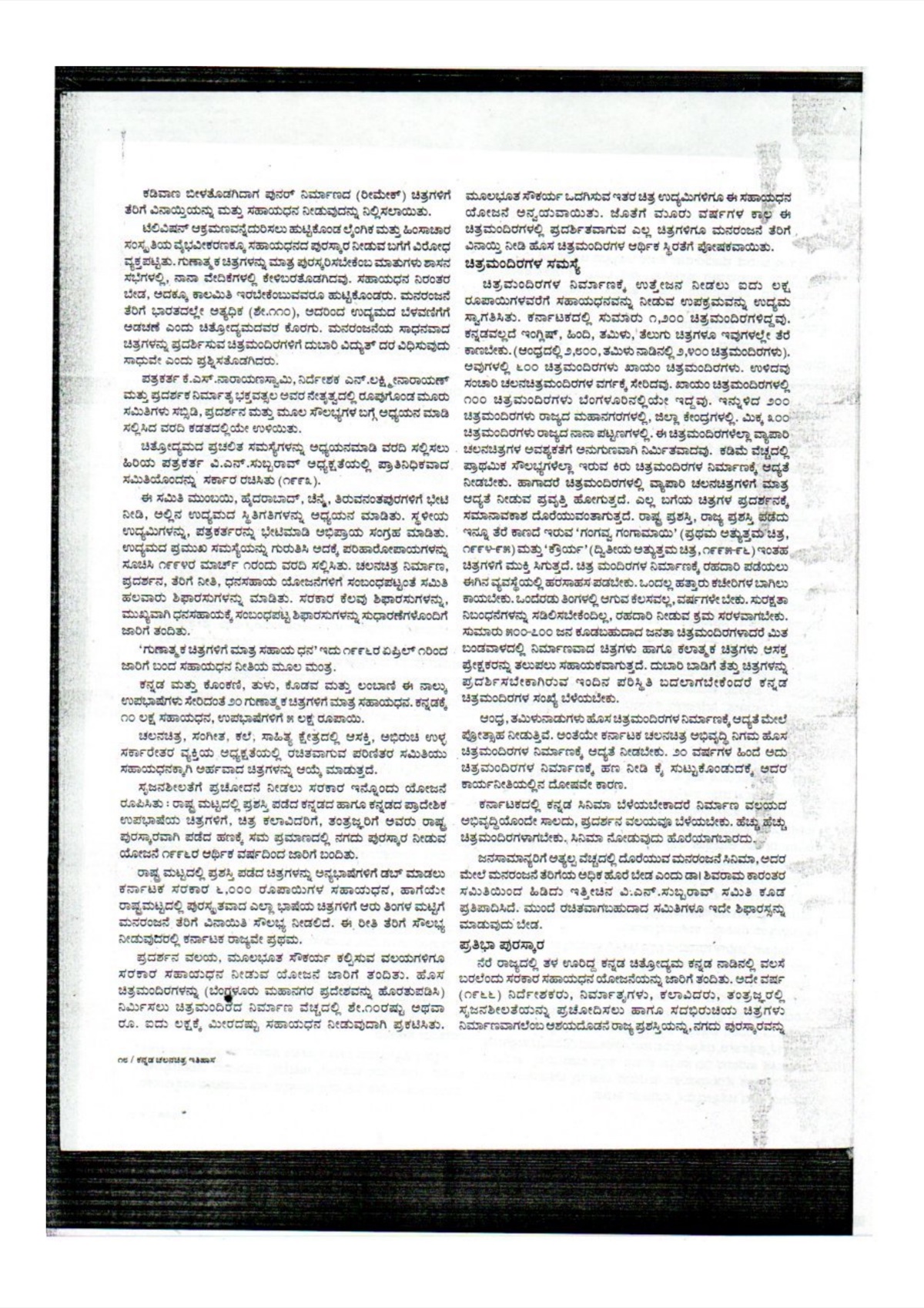
Veeranna’s film journey began under several banners — Karnataka Talkies Corporation, Karnataka Pictures Corporation, and finally Gubbi Karnataka Films. He started with Rs. 2,500 from theatre company resources, and by 1930 had formally incorporated the Karnataka Pictures Corporation with a capital of Rs. 1,00,000. By 1940, he had built a studio in Gandhinagara, Bangalore.
The Gubbi Company was the primary incubator of Kannada cinema talent. Several named artists left the stage for the screen:
Rajkumar, the biggest Kannada film star, came from Veeranna’s company.
“If he has turned film-minded to-day, the professional stage of Karnatak is the poorer for it.”— Ranganath (1960)
Source: Vrutti Ranga Darshana (1993); Ranganath (1960)
A Colossal Concern
The Theatrical Ecosystem · 1877–1960
“Peer’s troupe was ‘throwing into the shadows even a colossal concern like the Gubbi’s.’”— Ranganath (1960), p. 119
In 76 years, the Gubbi Company outlasted every rival. Ranganath identified three periods of Kannada theatre: experiment (1875–1900), golden age (1900–1940), and decline under cinema competition (1940 onward). The Gubbi Company is the only troupe that survived all three.
Most were ‘one pole tent troupes’ — dependent on a single performer and collapsing when they left. Bellave Narahari Shastri wrote nearly forty plays ‘specially for Veeranna,’ giving the Gubbi Company something no rival had: a dedicated playwright. The company built infrastructure — play-houses, zinc-sheet pandals seating 4,000, special trains — while others toured with eleven cartloads.
Source: Ranganath (1960), Chapter IV
Honour Upon Honour
Awards & Legacy
“The Gubbi Company had become an established art-institution with its fabulous paraphernalia, a band of over a hundred talented artists, scores of merited plays and with perhaps an unsurpassed pomp in showmanship. At this stage, Gubbi's was perhaps the most colourful and the best equipped professional troupe in South India.”— Dr. H. K. Ranganath
By the 1930s, top stage actors in the company earned Rs. 350 per month — a remarkable salary that reflected both the company’s profitability and Veeranna’s commitment to attracting and retaining the finest talent. The company’s productions achieved staggering runs: Sri Krishna Leela alone had 125 continuous shows in Mysore in 1944, a testament to the enduring audience demand for professional Kannada theatre.
Children’s Theatre Pioneer
In 1924, Veeranna founded the Bala Kalavardhini Nataka Sangha — a children’s theatre troupe run on professional lines as a branch of the main company. Young artists toured Karnatak for two decades, staging mythological plays including Sri Krishna Lila, Kamsa Vadha, and Rukmini Swayamvara. Ranganath noted they had ‘professional polish and perfection’ — though he critiqued that the themes were too heavy for young audiences.
— Ranganath (1960), pp. 214–215
He passed away on October 18, 1972, at the age of 81. The diary survives. The company’s legacy lives in every Kannada film and every Kannada stage.
“Can you bring that respect again?!”— K.S. Nagaratnamma, actress
Source: Wikipedia, Kannada Wikipedia, Ranganath (1960)
The Repertoire
58 plays and films across seven decades
Dashavatar — Prahlada scene
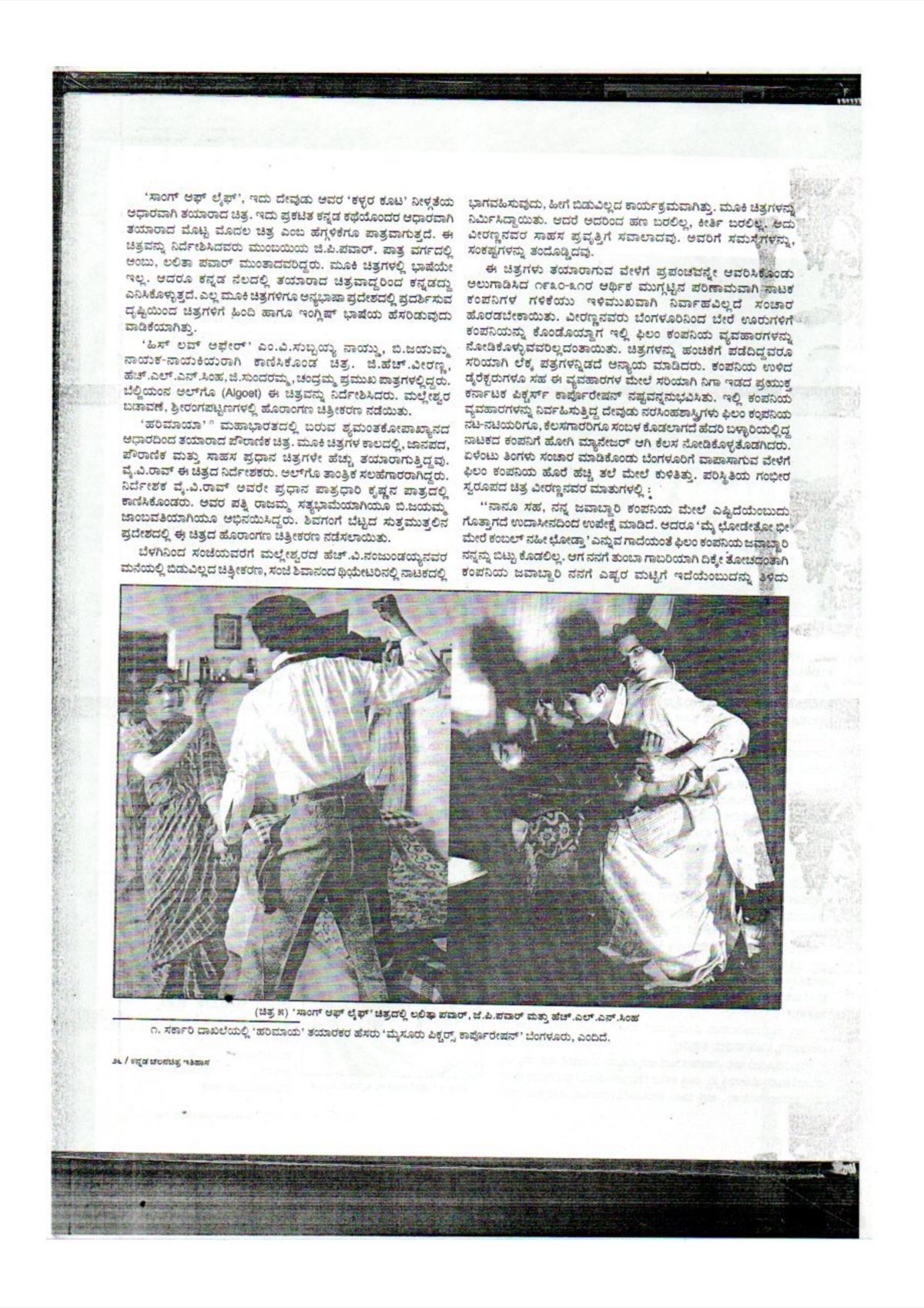
Film-era production
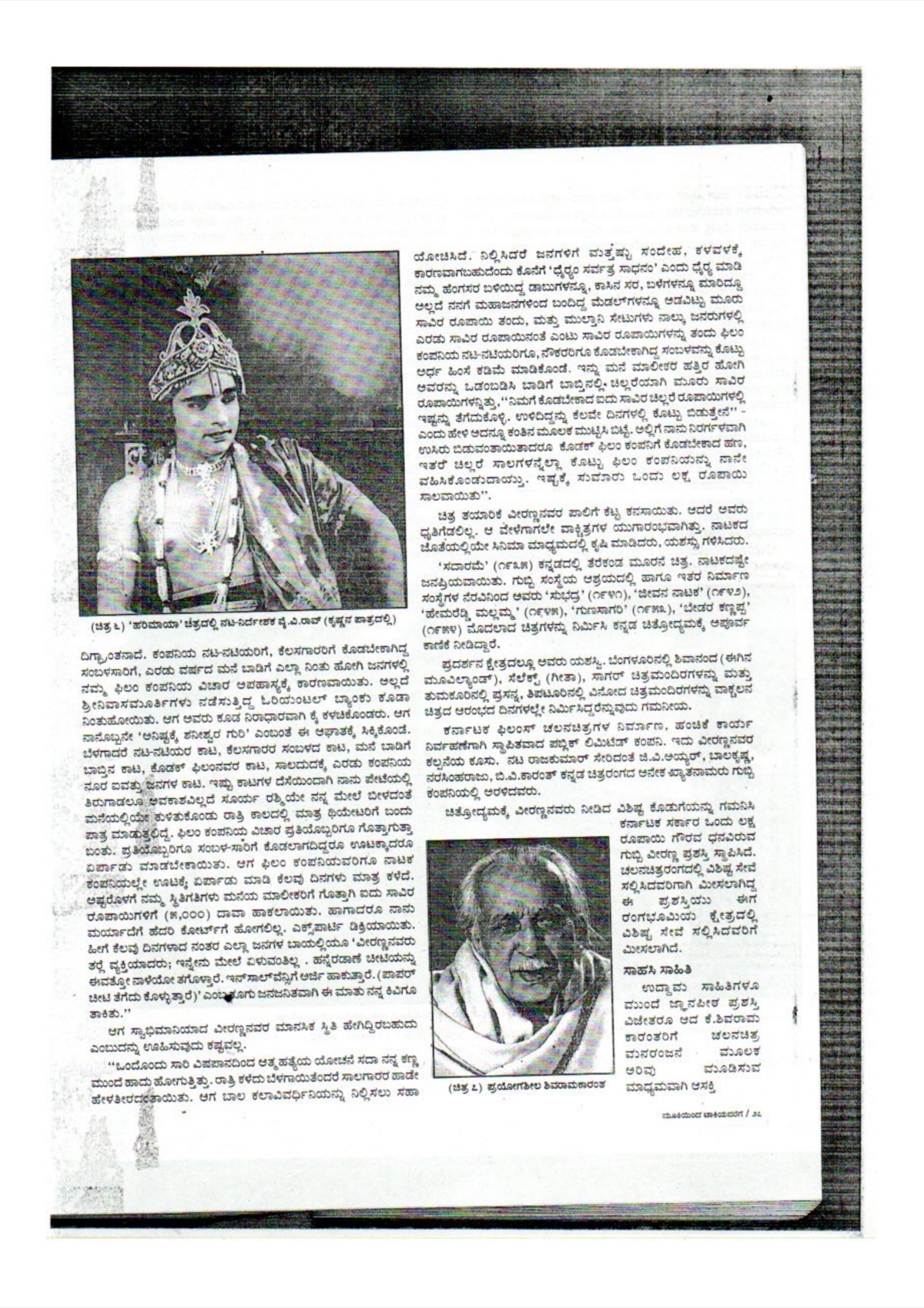
Veeranna in cinema
Kumara Ramana Kathe
1884
The very first play — adapted from Yaksagana
Chorakathe
~1886
Dharmapal Charitre
~1890s
Pandava Vijaya
Satya Harishchandra
Indrasabha
Satyavarma Charitre
~1890s
Prabhamani Vijaya
~1905
Vasantamare Vijaya
~1908
Prahlada Charitre
~1910
Subhadra Parinaya
~1912
Sri Krishna Leela
Kamsavadha
~1918
Jalandhara
~1920
Rukmini Swayamvara
Savitri
Kuruksetra
1934
The spectacular — elephants on stage, 6 hours, Rs. 30,000
Yajyodha
Featured lift platform innovation by G.V. Iyer
Usa Swayamvara
~1946
Dashavatara
~1950s
Perhaps the most spectacular of plays staged in Karnatak (Ranganath p.113)
Bedara Kannappa
Adapted to landmark 1954 film
Sadarame
Adapted to one of earliest Kannada talkies
Vasantasena
Adapted to 1941 film
Sati Sulochana
Ratnamanjari
Mahakavi Kalidasa
Vasanthamitre Vijaya
Mahandeva
Karnatak Samrajya
From Marathi Ranadundubhi
Swami Nisthe
From Marathi Chatrapati Shivaji
Sura Mahime
From Marathi Ekach Pyala
Raj Bhakti
From Marathi Rakshasi Mahatvakanksha
Tejaswini
Mahatma Kabir
Sadhu Tukiram
Akka Mahadevi
Chalti Dunia
Sahukar
Addadari
Kalachakra
Nisha Mahime
Samsara Note
Kalleravana
Bharata Darshana
Prabhavati Vijaya
Makkala Rajya
Children’s Theatre
Samsara Naukar
Possibly the first major Kannada social play
Bhakti Kabir
1924
Early film production in Bangalore
Song of Life / Sadharame
~1929
Among first Kannada films
Doctor (Hedu)
1935
Opening film at Gaiety Theatre inauguration
Harimaaya
~1930
His Love Affair
1930
Social film
Sadharame (talkie)
1935
Rs. 40,000 budget
Subhadru
1941
Jeevana Nataka
1942
Hemareddi Mallamma
1944
Gunasagari
1953
Most ambitious production
Bedara Kannappa
1954
Rajkumar’s breakthrough — landmark Kannada film
Timeline
First Bangalore Show
After witnessing the impressive performances of Bullappa's troupe in Bangalore, the company reforms its approach — commissions new plays, improves settings with self-rolling curtains, and stages its first Bangalore show of Kumara Ramana Kathe to a good reception.
Birth
Born on January 24 in Gulaganjihalli village, near Gubbi in the Tumkur district of the princely state of Mysore.
Lady Artist Rajamma Joins
A woman performer named Rajamma joins the Gubbi Company — decades before the 1931 controversy over women on stage. One of the earliest documented female stage artists in Karnatak professional theatre.
Joins the Theatre at Age 5
Joins the Gubbi theatre company, originally founded by Channanna and Abdul Azeez Saheb. Begins his lifelong association with the stage as a child performer.
Veeranna Becomes Proprietor
Having mastered every aspect of stage craft since joining at age 6 in 1896, Veeranna virtually becomes the proprietor of the entire management — transforming the Gubbi Company into a professional touring powerhouse.
Bellave Begins Writing
Bellave Narahari Shastri, the most prominent playwright of the Mysore professional stage, begins his association with the Gubbi Company. Over the following decades he writes nearly forty plays "specially for Veeranna," including Krishna Leela (1919), Yama Garvabhanga (1922), and Markandeya (1932).
Diary Begins
The earliest events recorded in Book 2 of his personal diary. Year header "1921" clearly visible. Mentions a figure of Rs. 1,200.
Royal Recognition
On November 17, His Highness the Maharajah of Mysore, G.C.S.I., formally presents an award to Veeranna, recognizing him as "Proprietor and Versatile Comedian" of the C.B.K.N. Company.
Expanding Operations
Financial records show figures of Rs. 500–800 and Rs. 1,000. Date reference "25-12-23" (Christmas Day 1923) appears in the text.
New Year Operations
Year header "1924" marks a new section. Continued narrative about company activities. Financial figures reference Rs. 500–1,000 range.
First Play-House Built in Bangalore
The Gubbi Company builds its own permanent play-house in Bangalore — a major investment signaling the transition from touring-only to having a fixed base of operations.
Children's Theatre Founded
Veeranna starts the Balakalavardhini Nataka Sangha — a children's theatre troupe run "on professional lines" as a branch of the Gubbi Company. Young artists tour Karnatak staging mythological plays including Sri Krishna Lila, Kamsa Vadha, and Rukmini Swayamvara. The troupe runs for two decades.
Peak Touring Years
Extensive entries covering tours, performances, and business dealings. Numbered sequences (1-2, 2-3) suggest structured tour schedules. Financial references to Rs. 1,000 and Rs. 5,000 indicate significant commercial success.
Youth Music Company Founded
Founds the "Bangalore Verisadla Nataka Sabha," a music company dedicated to youth development. The initiative runs for six years, nurturing the next generation of Kannada performing artists.
Gadag Branch & 250-Person Operation
Veeranna accepts leadership of a professional troupe at Gadag in addition to his main company. The Gubbi concern now has about 250 persons including artists and families, with three separate touring wings rehearsing and performing in different regions simultaneously.
Continued Growth
Diary records financial transactions including figures of Rs. 5,000 and references to "A.V. 50". Dense entries suggest active company management.
New Directions
Year header "1927" with marginal notes. References to "M.V.C." suggest new institutional relationships or recognition.
Expanding Horizons
Diary narrative jumps from 1927 to 1929. The company continues to grow with revenues in the Rs. 1,800–2,000 range.
Second Play-House Opens
A second, larger play-house with modern amenities is built in Bangalore and inaugurated by the Dewan of Mysore, Sir Mirza M. Ismail — one of the most powerful administrators in princely India.
Karnataka Pictures Corporation
Founds the Karnataka Pictures Corporation with a capital of Rs. 1,00,000 — an extraordinary investment signaling his commitment to Kannada cinema. Declares at the founding: "I stand by this spirit."
New Chapter
Year header "1932" marks a major new section in the diary after a gap from 1929. The company enters a new decade of operations.
South India & Canara Tours
The troupe visits Udipi and Mangalore in South Canara and extends deep into Tamil Nadu — Trichy, Ettiyapuram, Kumbhakonam and other centres. The company moves by special trains due to its massive equipment and personnel.
Kurukshetra — Golden Jubilee Masterpiece
For the company's Golden Jubilee (50 years since 1884), Veeranna commissions Kurukshetra from B. Puttaswamiah. The production costs Rs. 30,000 — a fortune in 1934. Staged in a custom 4,000-seat zinc pandal, the play runs 6 hours with elephants, horses, chariots, and film projectors on stage. 40 continuous shows in Bangalore. Film distributors cancel screenings — they cannot compete.
Year-End Records
Date "31-12-34" (December 31, 1934) appears — a year-end accounting. Financial ledger pages with itemized amounts (Rs. 500, 500, 300, 100) show structured company bookkeeping.
Gaiety Theatre Opens
The Gaiety Theatre cinema house is inaugurated, funded through an interfaith partnership with a Muslim merchant from Madurai. The film "Doctor" is screened as the opening feature — a milestone in Karnataka's cinema infrastructure.
Benefit Performances
Year header "1935" opens a new section. The English word "Benefit" appears alongside Rs. 3,000 — recording a benefit performance, a British theatre tradition adopted by the company. Revenue figures reach Rs. 3,000 per show.
"Karnatka Andhra Nataka Sarvabhauma"
During the South India tour by special train, Veeranna is publicly honoured in Vijayanagaram with the title "Karnatka Andhra Nataka Sarvabhauma" (Emperor of Karnataka-Andhra Theatre) — a rare cross-regional recognition of Kannada theatrical art.
Continued Growth
Year header "1936" with financial figures of Rs. 1,500. The company's operations continue expanding. A chronological summary on page 92 references milestones across 1925, 1930, and 1935.
Late 1930s Operations
Year header "1937" marks continued documentation. The diary entries become denser, suggesting an increasingly complex business.
South India & Andhra Tours
Major touring campaign into Andhra Pradesh, expanding the company's reach beyond Karnataka with experimental new productions and talent development.
Peak Revenue Era
Year header "1938" appears. A financial summary page records the largest figure in the entire diary — Rs. 30,000 — suggesting the company had reached peak commercial success.
Wartime Theatre
Year header "1940" marks the company's operations during World War II. Financial figures of Rs. 9,000 appear. The company continues performing despite wartime conditions.
"Nataka Ratna" — Jewel of Theatre
Year header "1942" in the diary. During the Mysore Dasara festival, Maharaja Jayachamarajendra Wodeyar confers the title "Nataka Ratna" (Jewel of Theatre) on Veeranna — the highest recognition for a theatre artist in Mysore state. Retrospective references to 1917 and 1919 suggest Veeranna is reflecting on how far the company has come.
Mid-War Years
References to 1943 appear with financial figures of Rs. 500. The company persists through the war years.
Company Centenary
The Gubbi Sree Channabasaveshwara Nataka Company celebrates its centenary — 100 years since the original founding in 1884. A remarkable milestone for any theatre company, let alone one in colonial India.
125 Continuous Shows in Mysore
The troupe arrives in Mysore and draws packed houses for 125 continuous shows of Sri Krishna Leela — a staggering run demonstrating the company's enduring box-office power even during wartime.
Gubbi Channabasaveshwara Natak Shale
The well-equipped permanent play-house built in Bangalore at great cost is formally opened by Dr. T. C. M. Rayan and named "Gubbi Channabasaveshwara Natak Shale" — a theatre bearing the company's patron deity's name.
Independence Era
Year header "1947" — Indian independence year. The C.B.K.N. Company transitions from performing under princely state patronage to the new democratic India. A historic inflection point for cultural institutions.
Film Career & Kanteerava Studios
References to 1951 in the diary. Veeranna transitions to cinema, producing and acting in Kannada films. He establishes Sree Kanteerava Studios — one of Bangalore's first film studios — bridging the theatrical and cinematic worlds.
Post-Independence Career
Year header "1952" marks a new section. The company adapts to post-independence Karnataka.
Legislative Assembly Service
Appointed to the Karnataka Legislative Assembly, serving for eight years. Brings the voice of the arts community into governance while continuing to oversee the Gubbi Company's operations.
Sangeet Natak Akademi Award
Awarded the Sangeet Natak Akademi Award for acting — India's highest recognition for performing arts. The diary references 1955 with "S.P.N." initials appearing, possibly a new associate.
Final Active Year in Diary
The latest year documented in the diary's narrative. 1956 is also the year Karnataka was formed as a unified state under the States Reorganisation Act — the end of the princely state system under which the Gubbi Company had first flourished.
Writing the Memoir
At age 71, Veeranna sits down on September 28 to write this diary — a retrospective memoir covering 35 years (1921–1956) of the Gubbi Company's history across 172 handwritten pages. He includes hand-drawn portraits of theatrical characters, an animal illustration, and closes with a devotional prayer and rangoli pattern. Financial addenda are added through November 25, 1962. The final page circles back to the 1923 royal commendation date.
Padma Shri & Passing
The Government of India awards Veeranna the Padma Shri, the nation's fourth-highest civilian honour, recognizing his lifetime contribution to the arts. On October 18, Gubbi Veeranna passes away at the age of 81, leaving behind an unmatched legacy in Kannada theatre and a 172-page diary that preserves the story in his own hand.
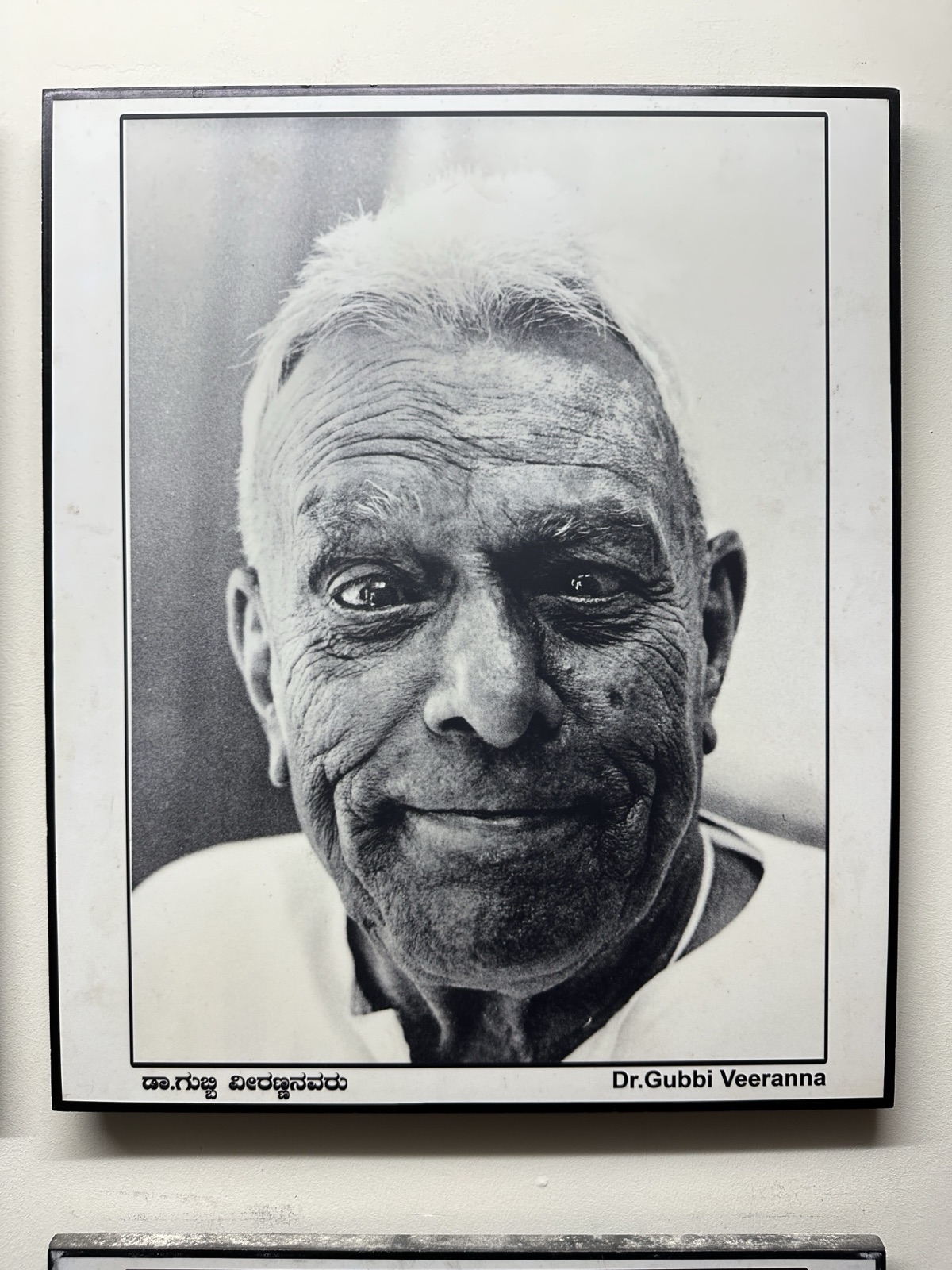
The Diary
172 handwritten pages in Kannada, composed on September 28, 1962 — a retrospective memoir covering 35 years of the Gubbi Company.
Eight pages that tell the story.
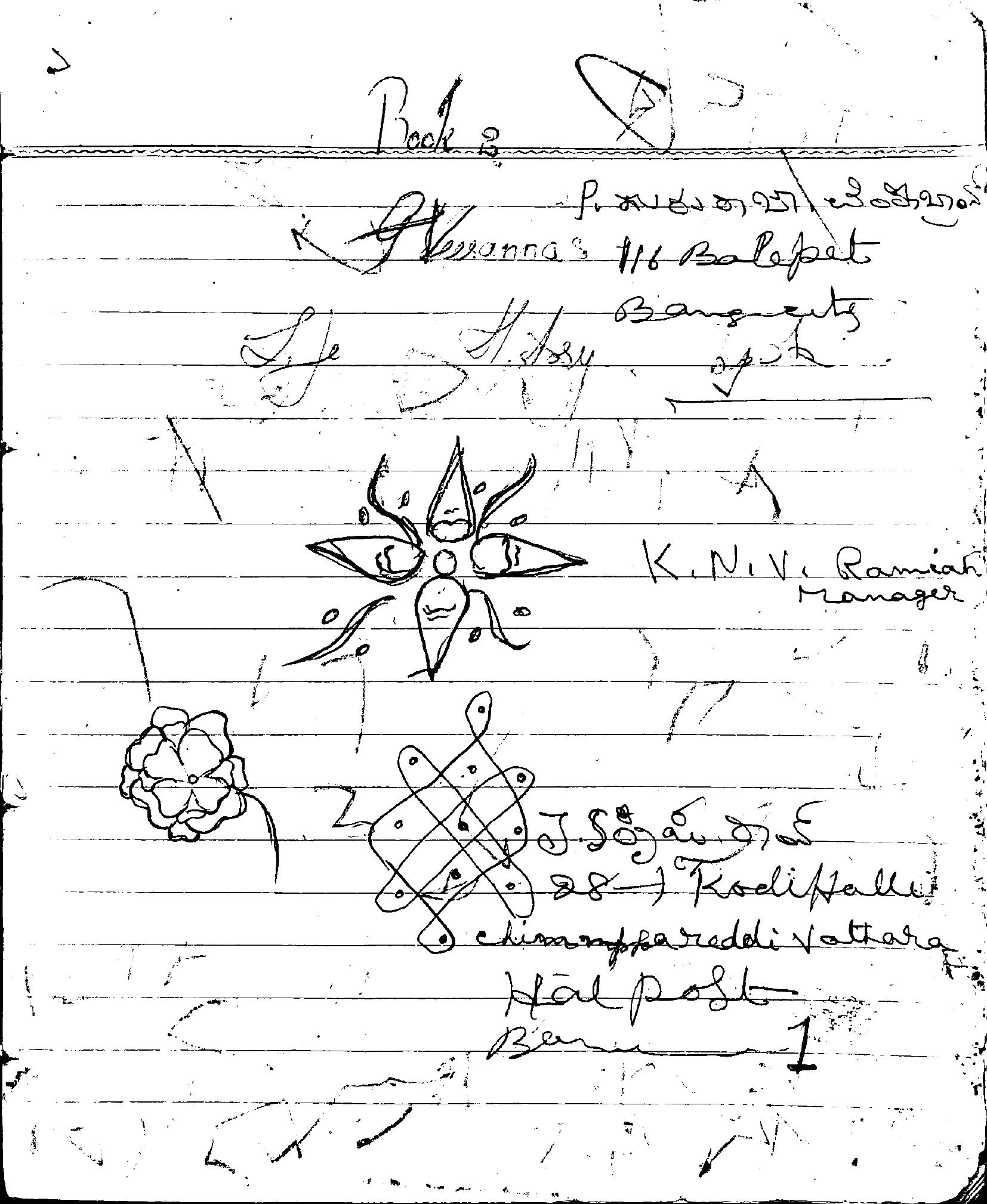
Title Page — Book 2
Title page with kolam patterns
Royal Commendation
Royal Commendation — English inscription
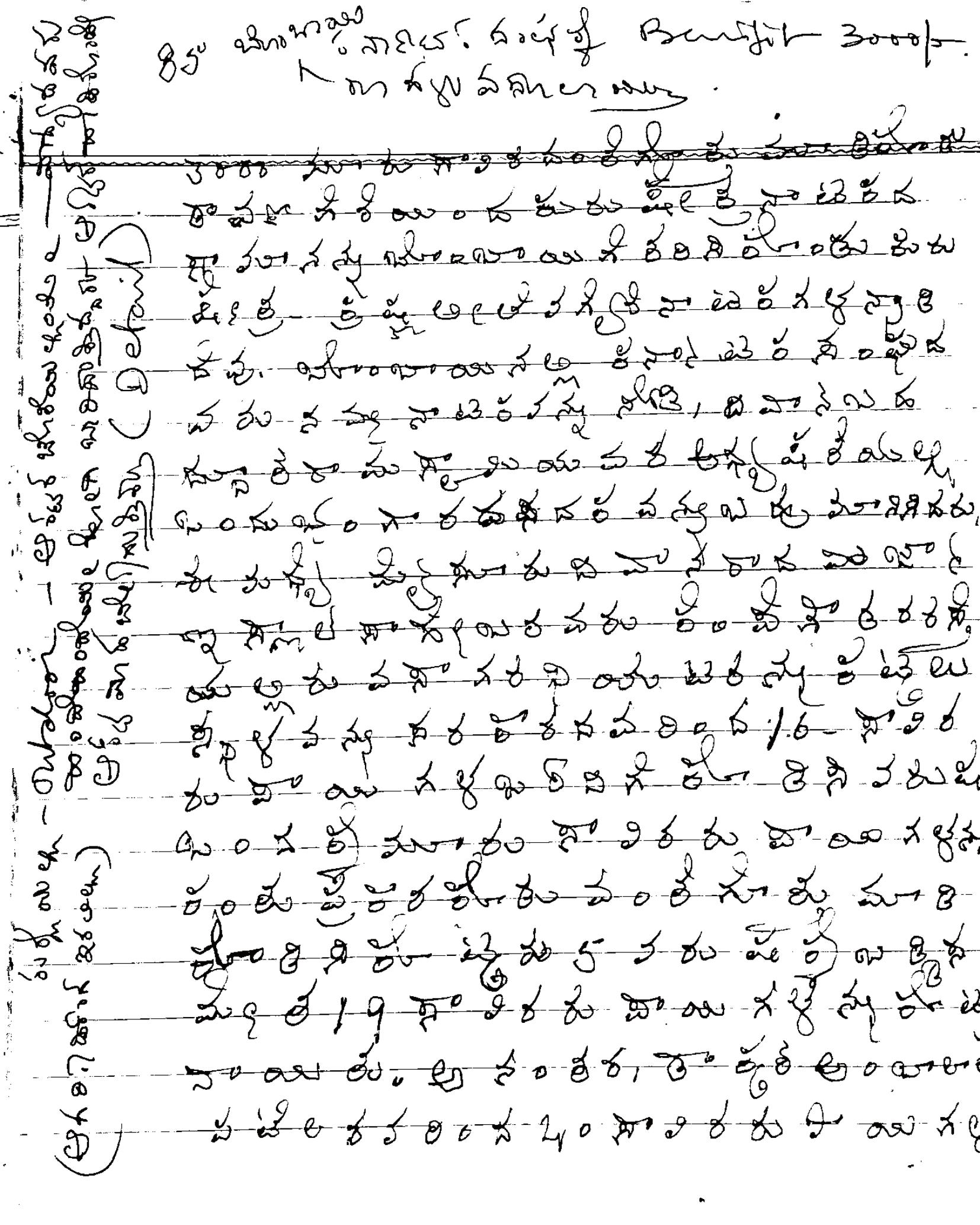
Benefit Performance — Rs. 3,000
"Benefit" — Rs. 3,000 performance
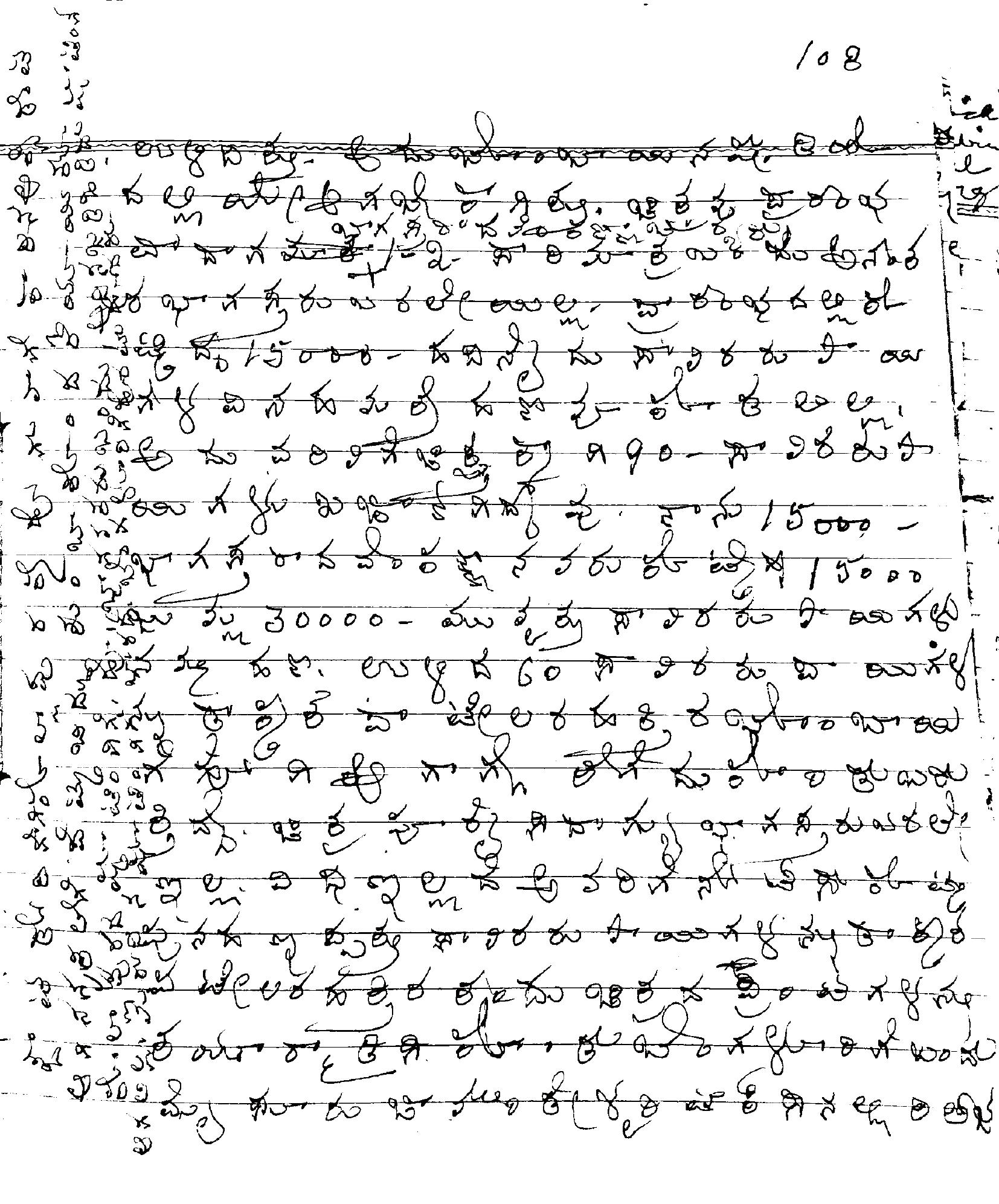
Major Financial Summary — Rs. 30,000
Rs. 30,000 — Kuruksetra production cost
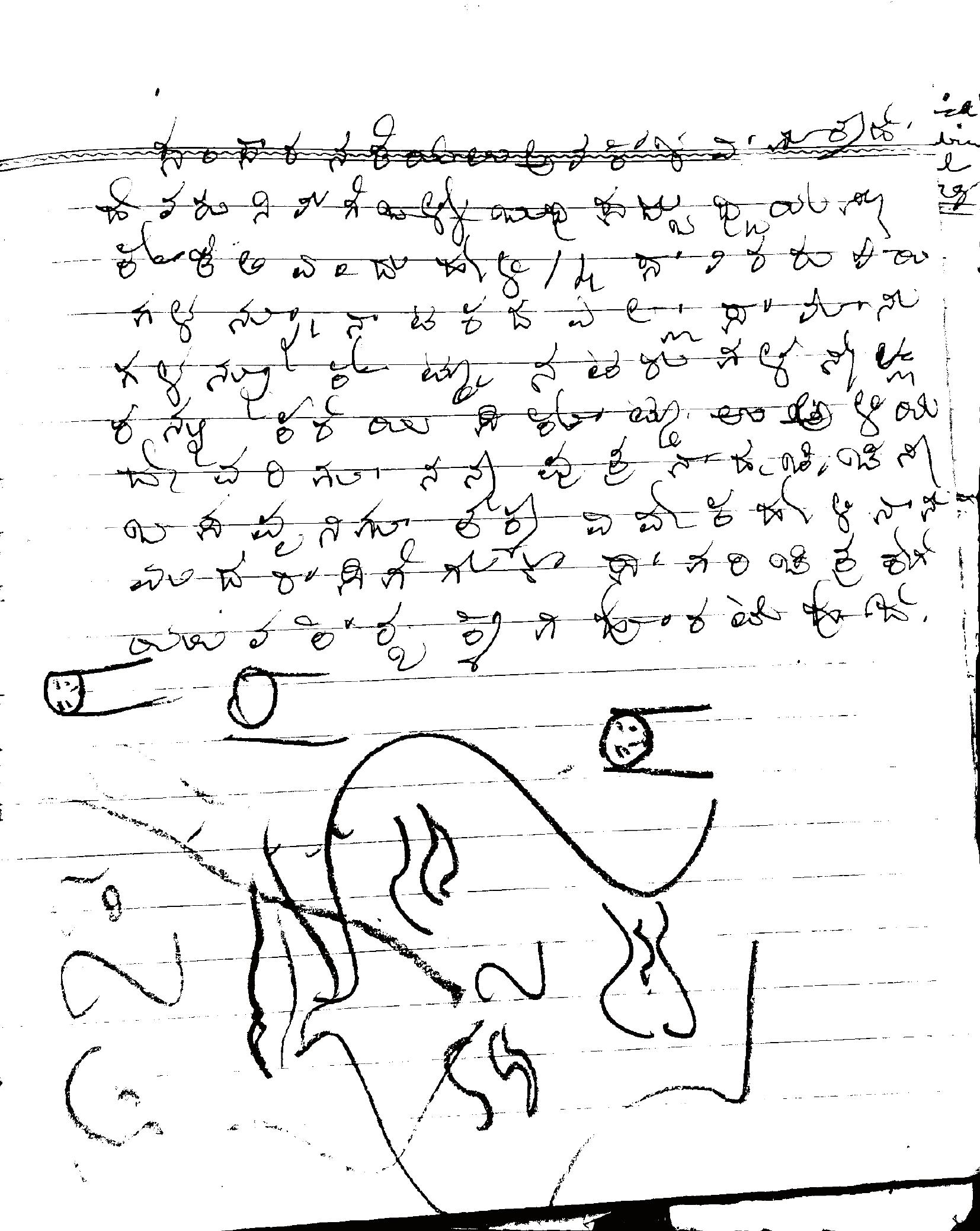
Animal Illustration
Hand-drawn animal illustration
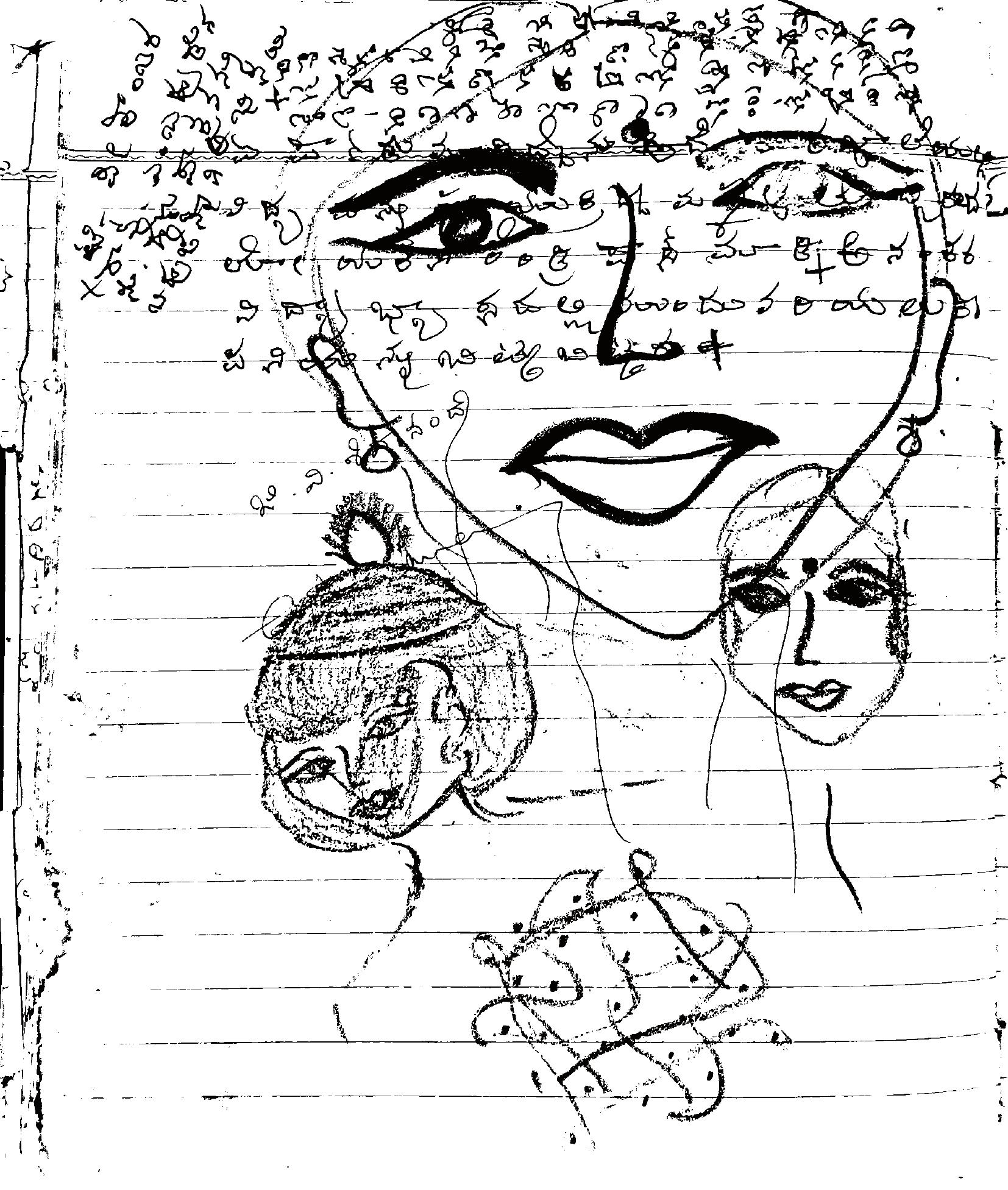
Portrait Drawings — Theatrical Characters
Portrait faces — theatrical characters
Closing Prayer & Rangoli
Closing prayer with rangoli
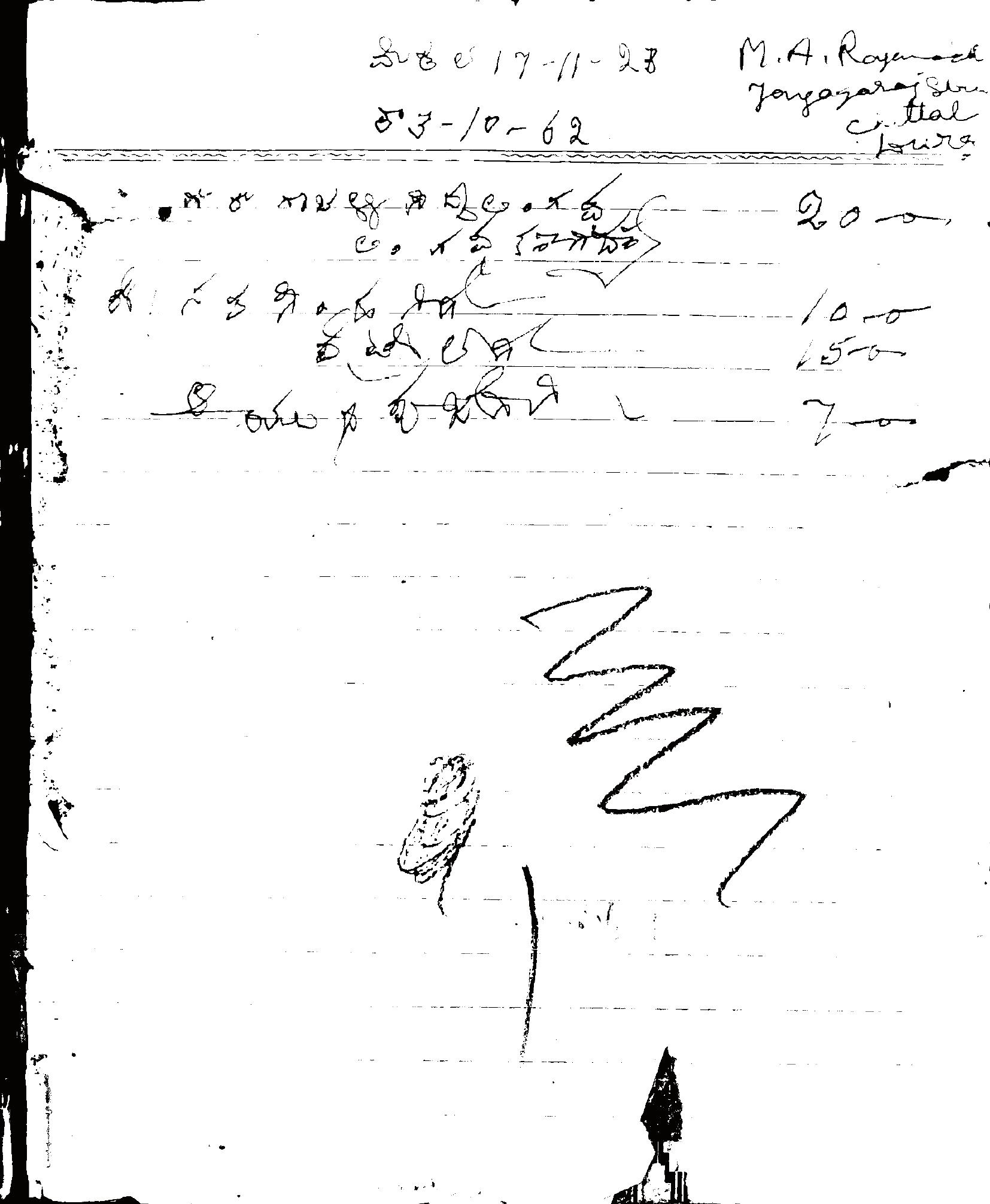
Final Page — Full Circle
Final page — full circle to 1923
Full diary viewer with annotations, zoom, and page navigation
Gallery
Photographs from the Gubbi Veeranna Memorial Museum in Gubbi, Karnataka — portraits, drama scenes, and moments with royalty, political leaders, and fellow artists.